Why Tiger Leaping Gorge Changed Everything I Thought About Hiking in China
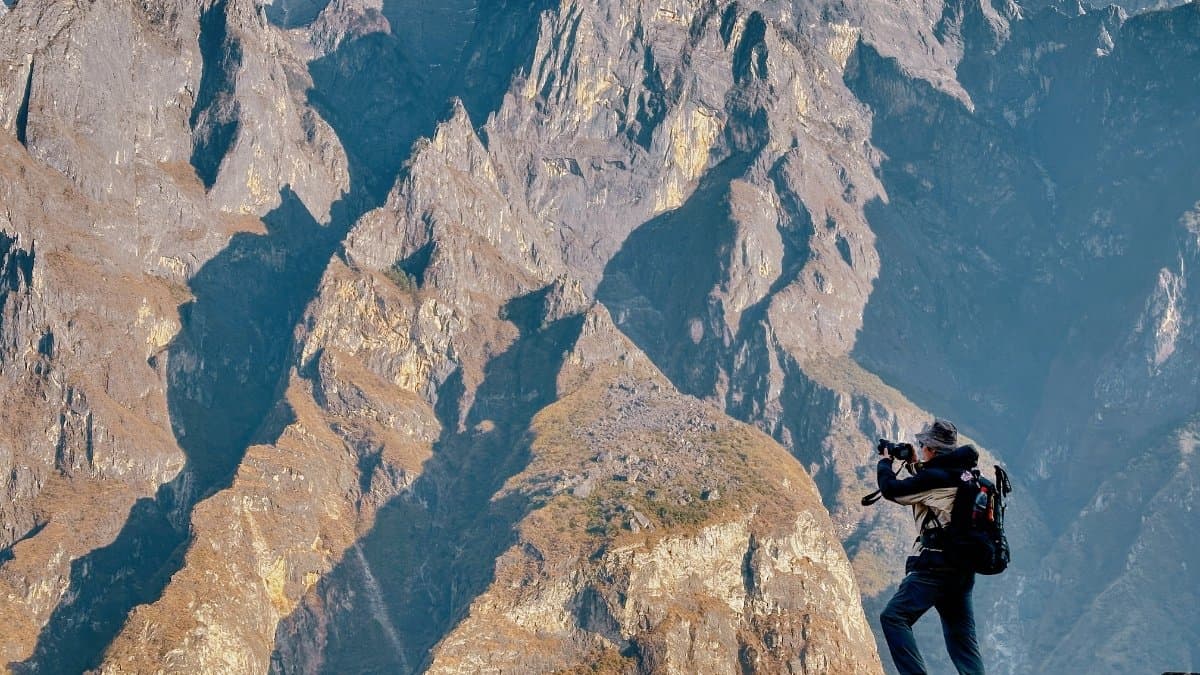
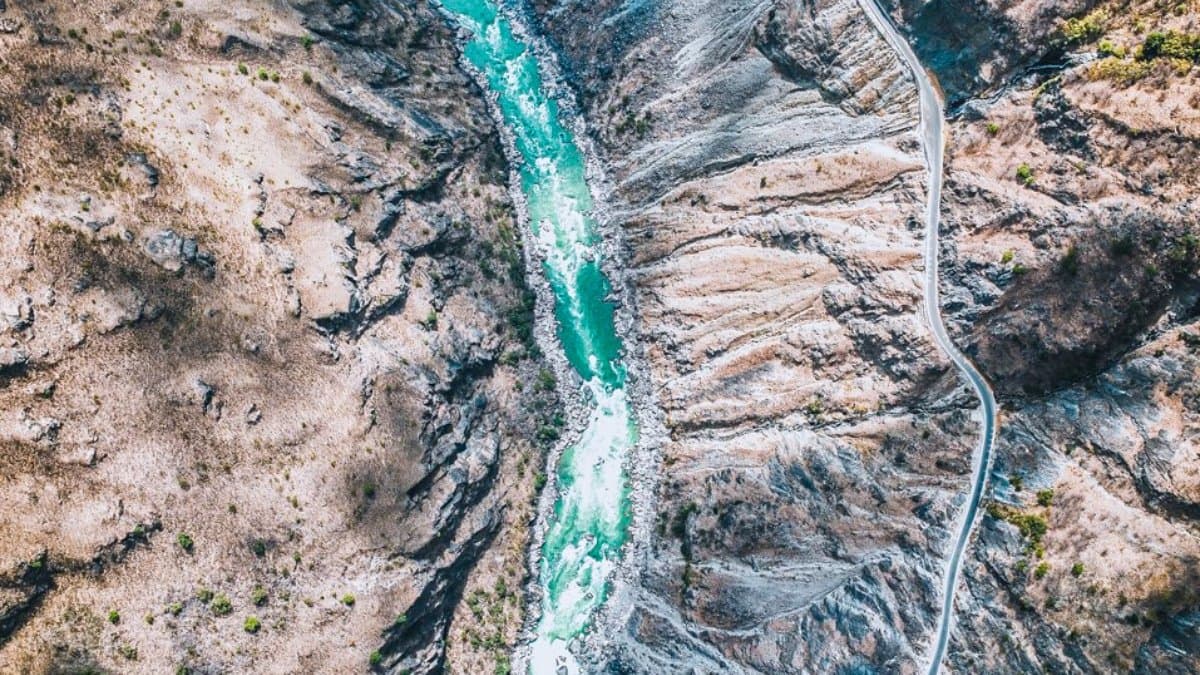
I'd hiked in a lot of places before I came to Tiger Leaping Gorge. Scottish Highlands, Patagonia, bits of Nepal. I thought I had a reasonable handle on what "dramatic landscape" meant. Then I stood at the trailhead of the High Path, looked out across a gorge so deep the river at the bottom was a thin white thread, flanked on both sides by snow-capped mountains punching through the clouds, and I realised I'd been playing in the minor leagues. Tiger Leaping Gorge sits in northwest Yunnan, wedged between Jade Dragon Snow Mountain (5,596m) and Haba Snow Mountain (5,396m), with the Jinsha River — the upper reaches of the Yangtze — thundering through the canyon floor roughly 3,000 metres below the peaks. It's one of the deepest gorges on Earth, and National Geographic ranks the High Path hike as one of the world's top ten classic hiking trails. I'd read those superlatives and assumed they were the usual travel-writer inflation. They weren't. If anything, they undersell it.
The route I took was a five-day trip from Lijiang, run by a local operator that specialises in small groups — max twenty people, three staff per group, ages 20 to 45. It combined the classic High Path hike with a lesser-known "secret trail" through pastures and primeval forest at the foot of Haba Snow Mountain, capped off with a BBQ under the snow peak. The whole thing cost around ¥2,680–2,880 ($370–400), which included transport, accommodation, meals, guides, and park entries. For context, that's roughly what you'd pay for a single night at a mid-range hotel in central Hong Kong. The value was absurd.
Find flights to Lijiang — your starting point for Tiger Leaping Gorge adventures.
Prices compared via Trip.com. We may earn a commission at no extra cost to you.
Search FlightsDay 1: Arriving in Lijiang — The Calm Before the Climb
Day one was a gathering day. I flew into Lijiang Sanyi Airport in the early afternoon — a short hop from Kunming, though there are direct flights from most major Chinese cities. The air hit different the moment I stepped off the plane: thinner, cleaner, with a sharpness that made me aware of my lungs in a way sea-level air doesn't. Lijiang sits at 2,400 metres, which isn't high enough to cause serious altitude issues for most people, but it's enough to remind you that you're heading into mountain country. The hotel was comfortable — a proper four-star in the city, the kind with reliable hot water and a breakfast buffet that covered both congee and toast. I had the afternoon free, so I wandered into the Old Town, grabbed a bowl of crossing-the-bridge noodles from a side-street restaurant, and watched the light change on the rooftops as the sun dropped behind the mountains. Lijiang has a particular quality at dusk — the sky goes through shades of purple and copper that feel borrowed from a different planet. The evening briefing was in the hotel lobby. Our guide — a young, sun-weathered woman who'd clearly spent more time on mountain trails than in offices — outlined the next four days with the kind of calm authority that immediately makes you trust someone. "Tomorrow is the big day," she said. "The 28 Switchbacks. It's not technically difficult, but it will ask something of you. Bring your lungs and your patience, and leave your ego at the hotel." I liked her immediately.
Arrive in Lijiang a day early if you can — the altitude adjustment helps. The Old Town is touristy but genuinely beautiful, especially in the early morning before the crowds arrive. A bowl of Yunnan rice noodles from a local spot costs about ¥15.
Day 2: The 28 Switchbacks — Where the Trail Gets Serious
We left Lijiang at 8am and drove two hours northwest to the Tiger Leaping Gorge scenic area. The road wound through villages and terraced fields, climbing steadily, until the landscape opened up and there it was — the gorge, splitting the earth like a wound between two enormous white-capped mountains. Even from the road, the scale was staggering. You could fit entire European valleys inside this thing. At the trailhead, we transferred into smaller local vehicles — the road into the gorge is narrow and winding, only accessible to licensed drivers who know its moods. We arrived at a guesthouse called Naxi Yaoge around midday, had lunch together (local Naxi-style dishes, nothing fancy but filling and honest), and then the hiking began. The High Path is 11.5 kilometres on Day 2, with roughly 450 metres of elevation gain, and the guide estimated six hours at a comfortable pace. The first section is a steady climb through scrubby hillside with the gorge opening up to your left — each step revealing more of the canyon below, the river getting further away, the mountains getting closer. And then you reach the 28 Switchbacks.
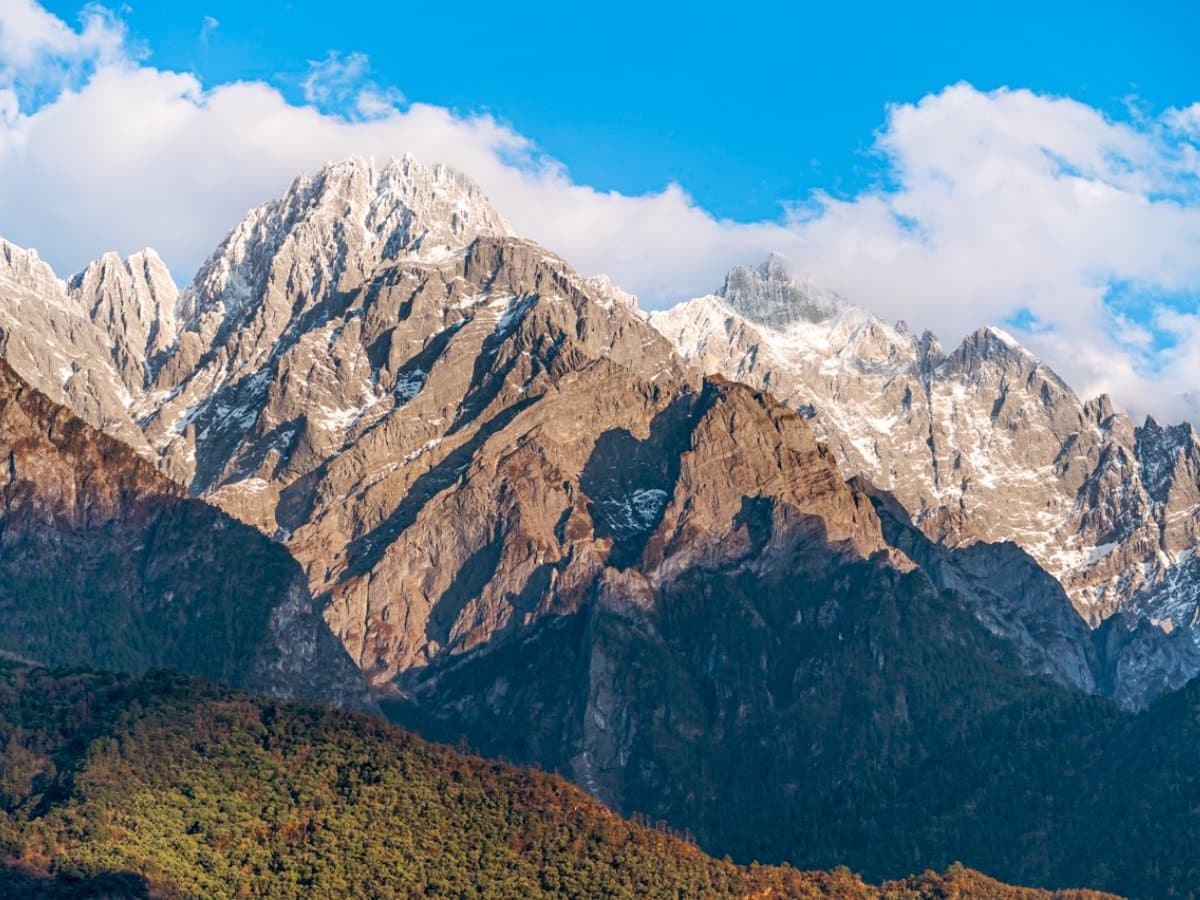
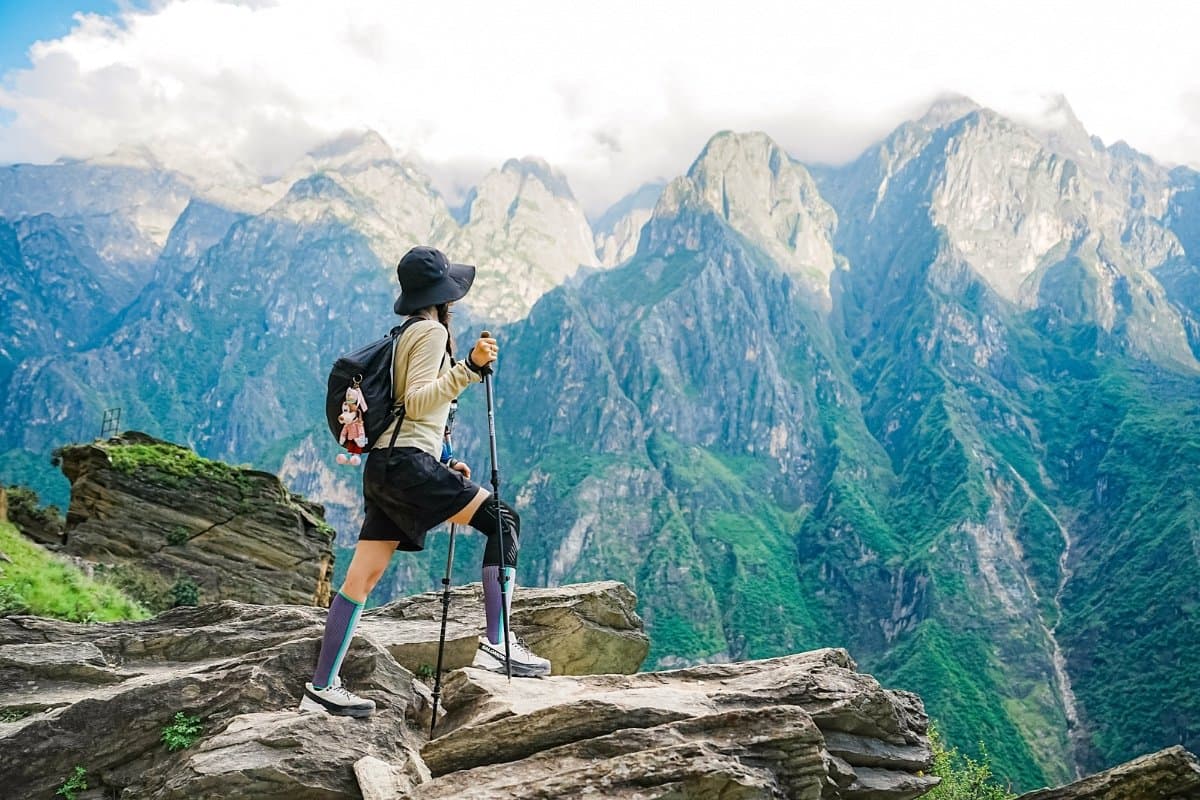
The 28 Switchbacks — some locals call them the 24 Switchbacks, nobody seems to agree on the exact count, and honestly by switchback fifteen I'd stopped counting — are the crux of the entire hike. The trail zigzags steeply up the gorge wall, each turn tighter than the last, the path dusty and loose underfoot, the sun beating down with the particular intensity you get at 2,500 metres where the UV cuts through thinner atmosphere like it means business. My calves were screaming by switchback eight. By twelve, I'd developed an intimate relationship with my trekking poles that bordered on emotional dependency. By twenty, I was taking rest stops every three minutes and drinking water at a rate that made me worry about supplies. And the whole time — the whole relentless, leg-burning, lung-squeezing time — the view was getting more absurd with every metre of elevation gained. At one particular bend, I turned around to catch my breath and the panorama hit me like a physical force. Jade Dragon Snow Mountain filled the entire southern sky, its glaciated peak blazing white against deep blue, while below — impossibly far below — the Jinsha River was a thin turquoise ribbon carving through dark rock. The gorge walls dropped away in near-vertical cliffs on both sides. The air was thin and sharp and smelled of dust and pine. A hawk circled lazily in the thermal rising from the canyon floor. I stood there, hands on knees, sweat dripping off my nose, heart hammering, and thought: this is why people fly across the world for this trail. The guide was brilliant through this section — she set a pace that kept everyone moving without pushing anyone to breaking point, stopped at strategic viewpoints to let the group regroup and hydrate, and dropped in quiet facts about the geology and ecology of the gorge that made the suffering feel meaningful. "This gorge was carved over millions of years," she said at one rest stop. "Your legs hurt for six hours. The river has been working for six million years. Perspective."
Bring trekking poles for the 28 Switchbacks — they're not optional, they're essential. Carry at least 2 litres of water per person. There are occasional supply points along the trail, but their availability is unpredictable. Start early to avoid the worst of the afternoon sun, and wear a hat — shade is almost non-existent on the switchback section.
The High Path Views: Between Two Snow Mountains
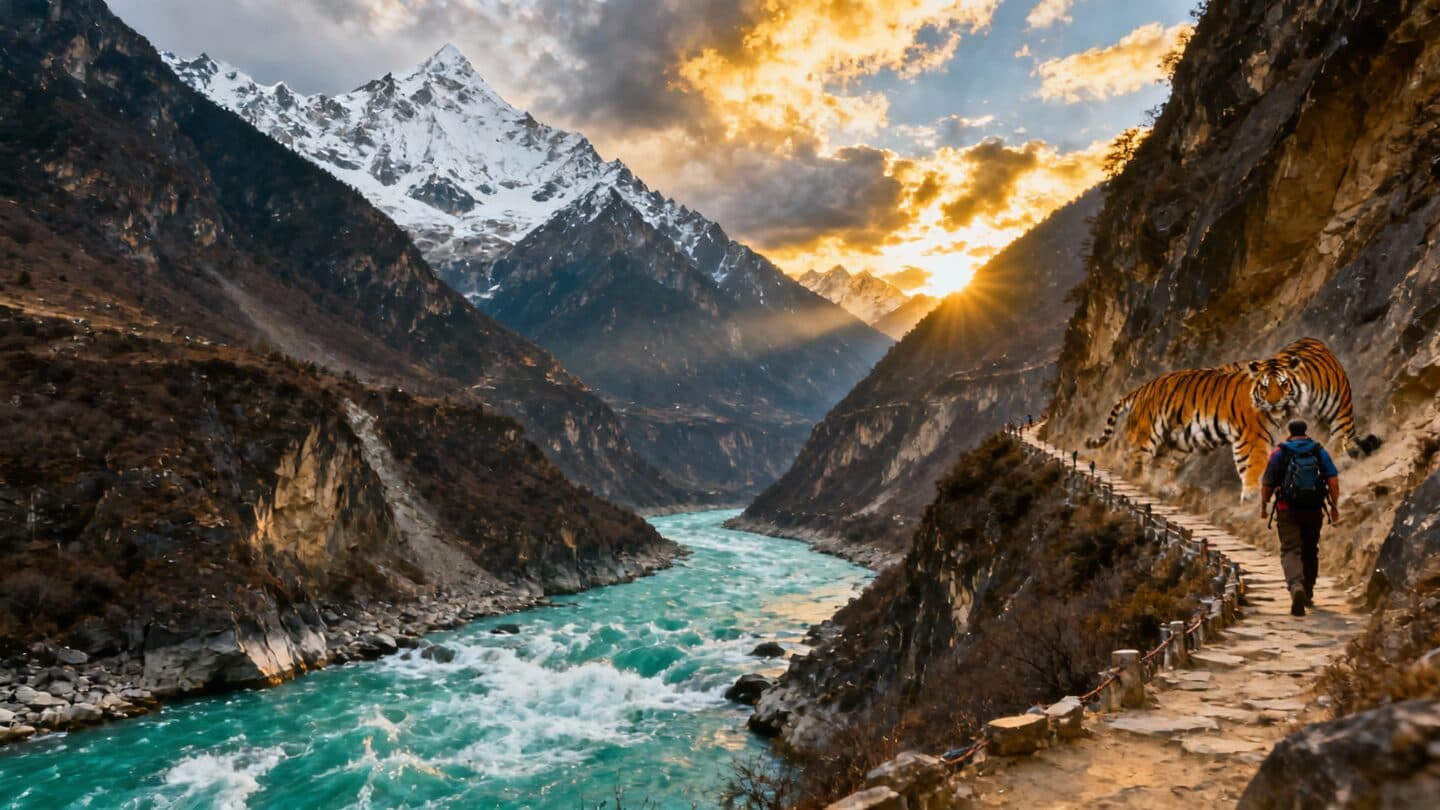
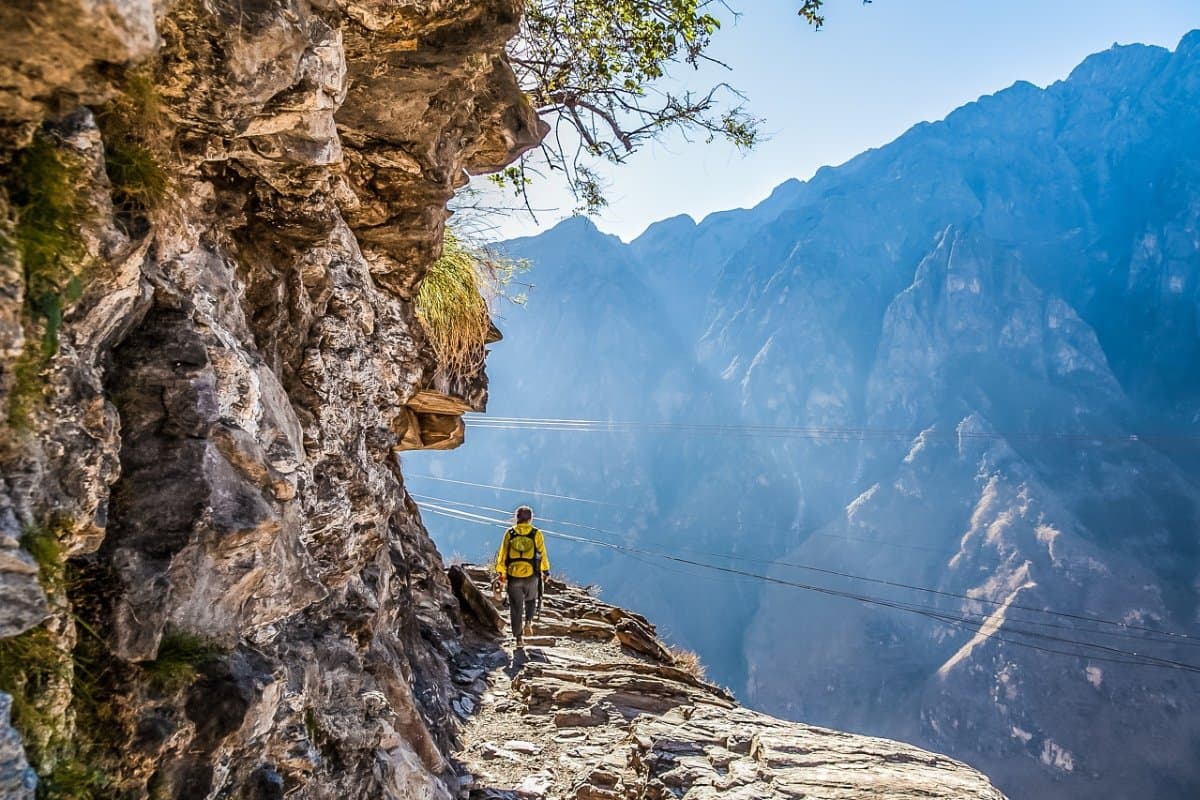
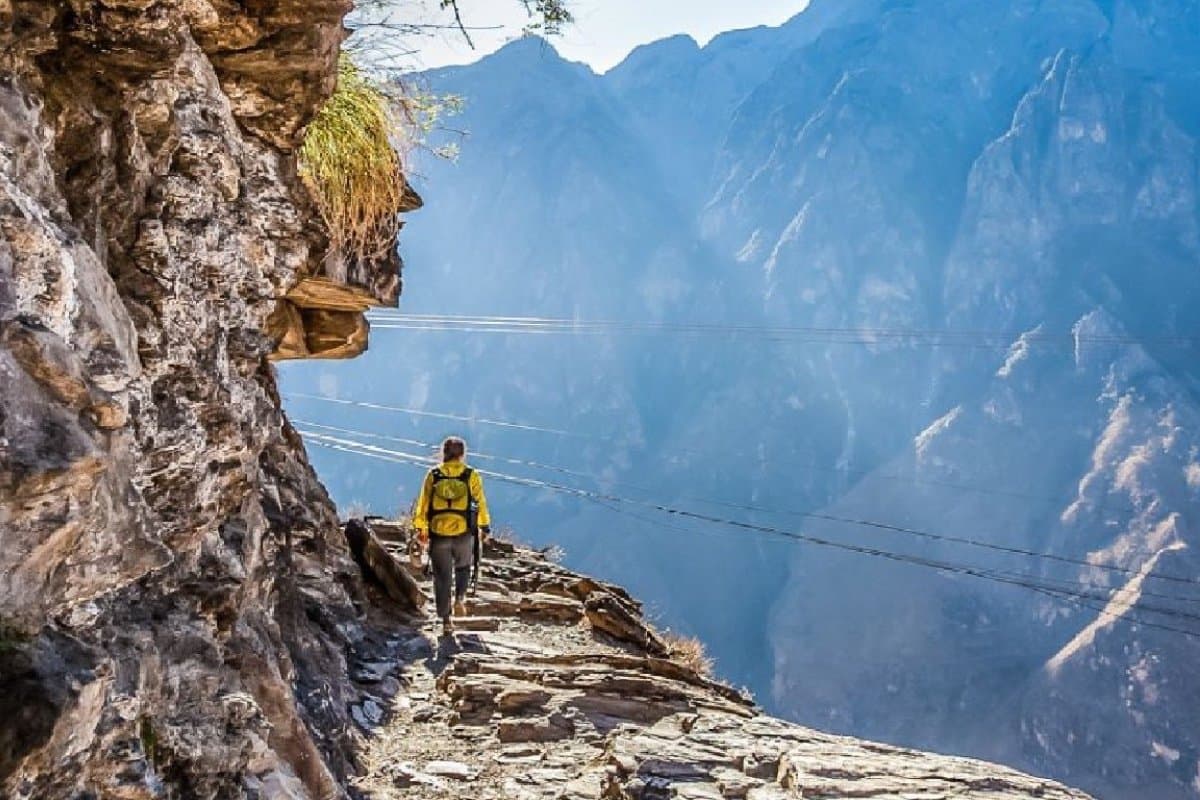
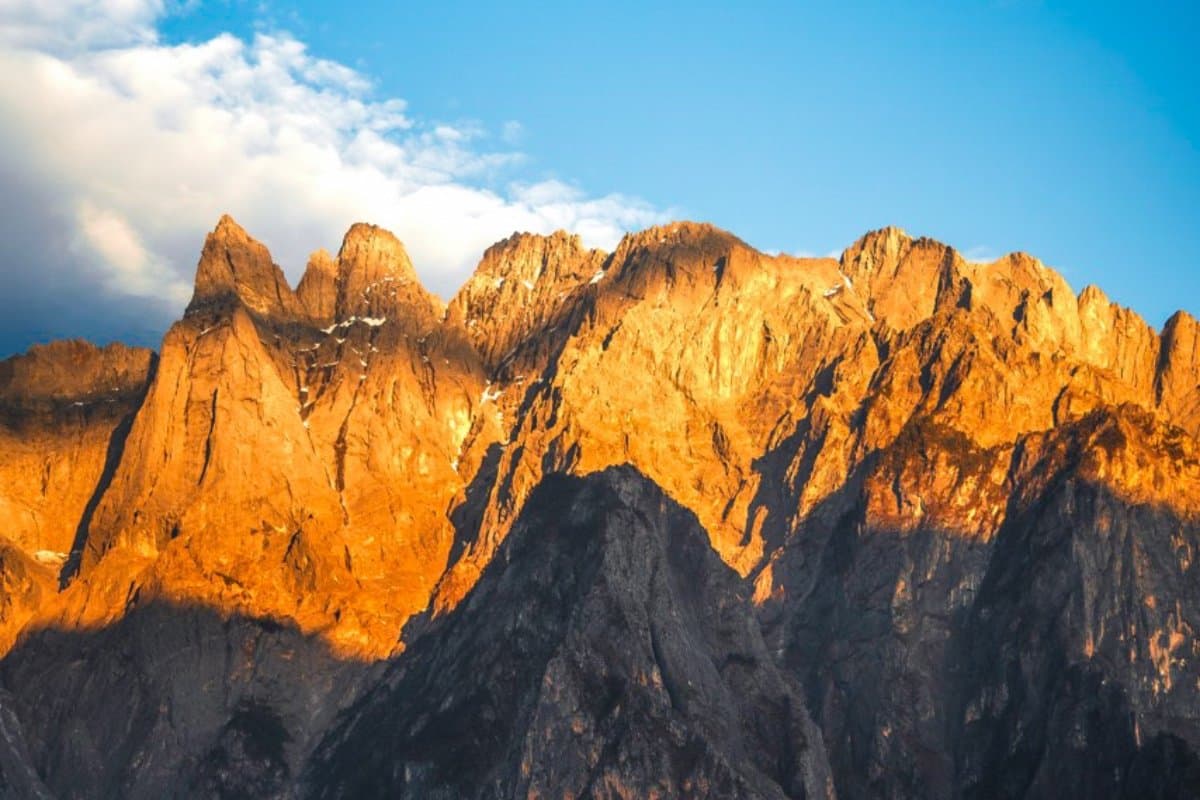
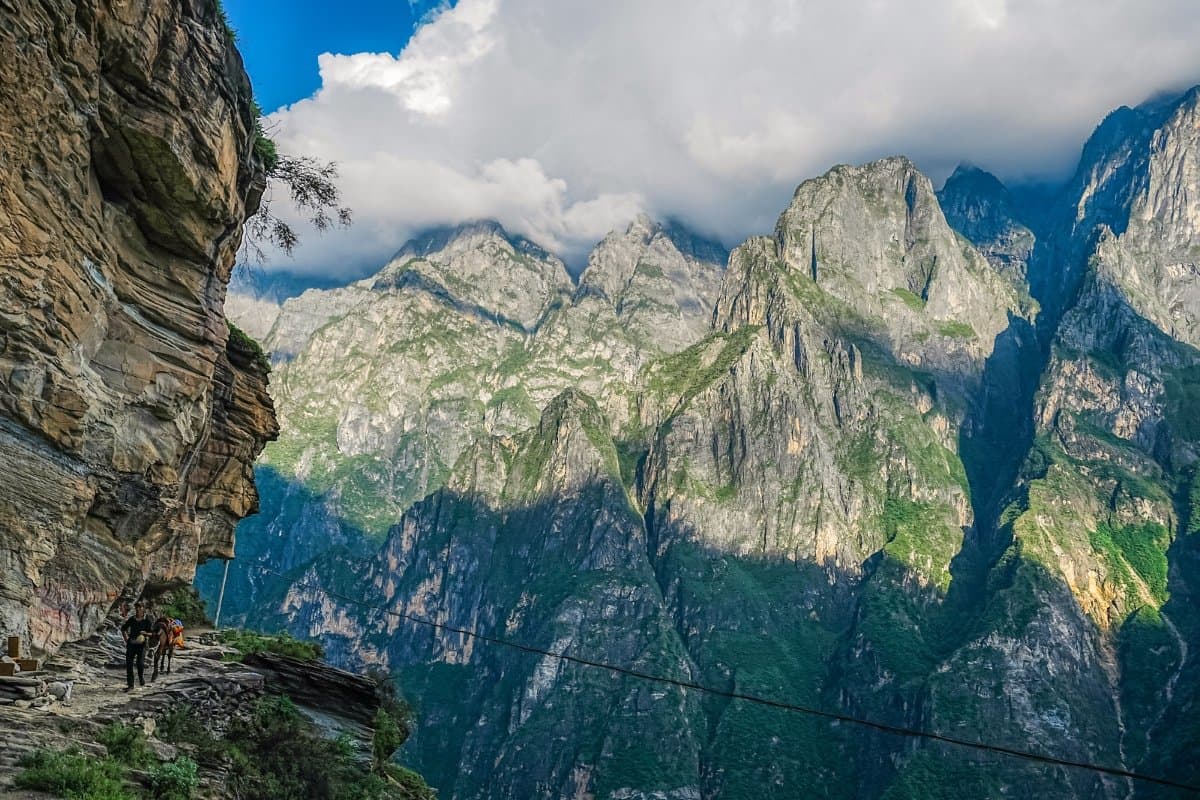
After conquering the switchbacks, the trail levels out onto the High Path proper — a narrow track cut into the gorge wall roughly halfway between the river and the peaks. And this is where Tiger Leaping Gorge transcends "good hike" and enters "once in a lifetime" territory. The path contours along the mountainside, and the view is essentially a continuous, evolving panorama of two snow mountains separated by one of the deepest gorges on Earth. To the south, Jade Dragon Snow Mountain dominates — a jagged wall of rock and ice with thirteen peaks above 5,000 metres, its glaciers catching the afternoon light and throwing it back in shades of gold and white. To the north, Haba Snow Mountain rises in a more rounded, gentler profile, but no less imposing — its summit wreathed in cloud, its lower slopes covered in dark forest that gives way to bare rock and then snow. Between them, the Jinsha River roars. You can't see it from the High Path — it's too far below — but you can hear it. A constant, bass-note thunder that vibrates through the rock under your feet, a reminder that the force which carved this gorge is still at work, still grinding, still patient. It's a sound that makes you feel very small and very temporary, and I mean that in the best possible way.

Night at the Mid-Way Guesthouse: Sunset, Stars, and Mountain Silence
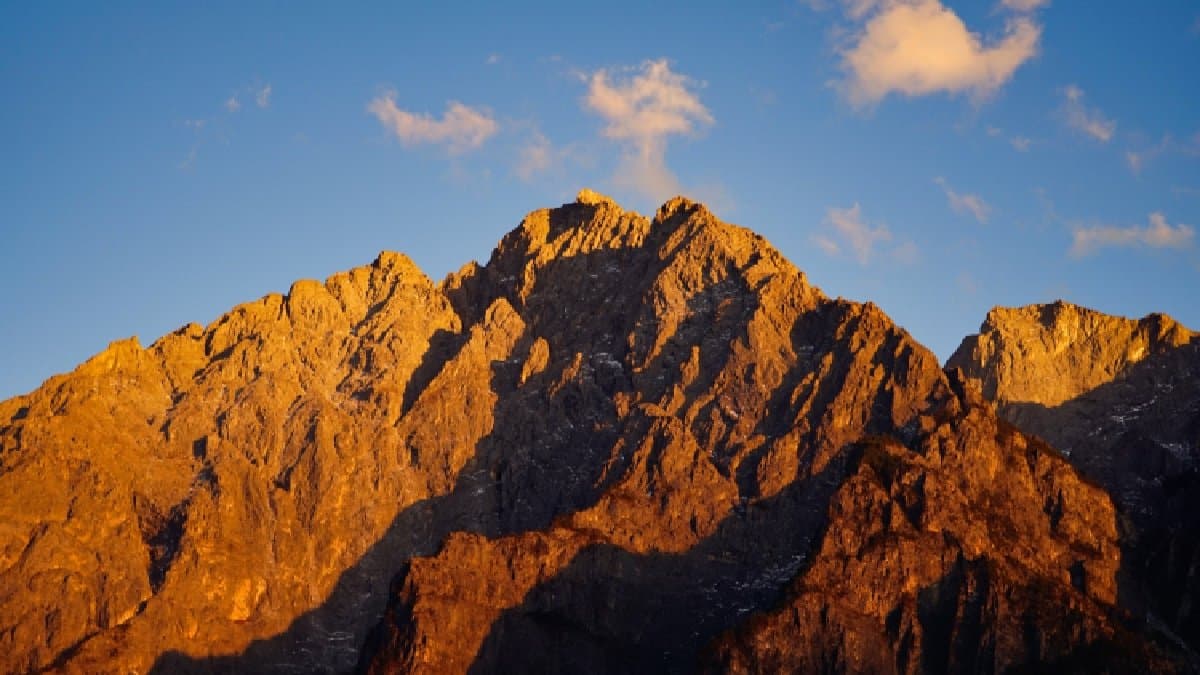
The day's hike ended at a mid-way guesthouse perched on the gorge wall — a simple building with a famous terrace that faces directly south towards Jade Dragon Snow Mountain. We arrived in the late afternoon, legs trembling, shirts soaked through, and I dropped my pack on the terrace and didn't move for twenty minutes. The guesthouse served dinner — proper farmhouse cooking, stir-fried vegetables, braised pork, steaming rice, the kind of food that tastes exponentially better when your body has earned it. A cold beer appeared. I may have made an involuntary noise of happiness. But the real show started at sunset. The terrace at the mid-way guesthouse is specifically positioned for what the Chinese call "ri zhao jin shan" — sun-gilded gold mountain. As the sun dropped towards the western ridge, Jade Dragon Snow Mountain caught the last light and turned from white to gold to deep amber to a final, impossible shade of rose-pink before the shadow climbed the peak and the mountain went dark. The whole transformation took about fifteen minutes, and nobody on that terrace spoke a word during any of it. Twenty strangers, united in stunned silence, watching a mountain change colour. And then the stars came out. Mountain guesthouse conditions are basic — the rooms have thin walls, the sound insulation is more theoretical than practical, and the beds are functional rather than luxurious. But lying in bed that night, I could see stars through the window, thick and bright and scattered across a sky unpolluted by city light. The Milky Way was visible as a dense band. Jade Dragon Snow Mountain was a dark silhouette against the star field. The only sound was the faint, distant rumble of the Jinsha River, three thousand metres below. I lay there and thought about all the nights I'd spent in cities, staring at ceilings, and how different it feels to stare at infinity instead.
Mountain guesthouse accommodation is basic — expect thin walls and shared facilities. Bring earplugs if you're a light sleeper. The guesthouses are clean and the bedding is adequate, but this isn't a hotel experience. It's a mountain experience, and the trade-off for basic rooms is a terrace view that money genuinely cannot buy in any city on Earth.
Day 3: The Waterfall Section and Upper Tiger Leaping
Morning on the gorge wall started early — partly because mountain guesthouses don't do lie-ins, and partly because the pre-dawn light on Jade Dragon was worth setting an alarm for. A pale pink glow spread across the eastern sky, silhouetting the peaks, and then the sun crested the ridge and the whole gorge flooded with golden light. I stood on the terrace with a cup of instant coffee (guesthouse-grade, but hot and caffeinated) and watched the shadows retreat down the canyon walls. Not a bad way to start a Tuesday. The morning hike was the waterfall section of the High Path — the second half of the classic route. This was a different character entirely from the switchbacks: a descending trail, roughly five kilometres, dropping about 400 metres through terrain that felt greener and softer than the exposed switchback section. Waterfalls cascaded down the rock face, some thundering, some delicate — thin veils of water catching the morning light and splitting it into tiny rainbows. The path was wetter here, sometimes slippery with spray, and the guide reminded everyone to take it slow on the downhill sections. "Your knees have to last the whole trip," she said. "Don't be a hero on the descents."
After completing the waterfall section, we drove a short distance to the Upper Tiger Leaping viewing platform — the most visited spot in the gorge and the one you see on all the postcards. The guide had deliberately scheduled this for the afternoon, when most tour groups have already left (they typically arrive in the morning). Smart move. The platform overlooks the narrowest point of the gorge, where a massive rock sits mid-river and, according to legend, a tiger once leaped across to escape a hunter — hence the name. The water here is ferocious, compressed into a narrow channel and erupting in explosions of white foam and spray that you can feel from the viewing platform thirty metres above. Standing there, watching the Jinsha River hurl itself against that rock with a force that shook the metal railings under my hands, I understood why this gorge has the reputation it does. It's not just the depth, or the mountains, or the trail — it's the raw, kinetic energy of the water. The river is alive in a way that's almost aggressive, and being close to it after two days walking high above made the contrast visceral. Up on the High Path, you feel contemplative and small. Down by the river, you feel exhilarated and slightly alarmed. Both are excellent. Afterwards, we drove two hours east to Haba Village, where the final chapter of the trip was waiting. The road wound through increasingly remote countryside — terraced fields giving way to forest, the occasional yak grazing by the roadside, prayer flags fluttering in the wind at mountain passes. We checked into a local guesthouse in the village, basic but warm, and I fell asleep to the sound of wind in the pine trees.
Find hotels in Lijiang — the perfect base before and after your Tiger Leaping Gorge adventure.
Prices compared via Trip.com. We may earn a commission at no extra cost to you.
Compare HotelsDay 4: The Haba Snow Mountain Secret Trail
If Tiger Leaping Gorge was the dramatic overture — all crashing cymbals and soaring brass — then the Haba secret trail was the quiet, beautiful movement that followed. And honestly, several people in our group said afterwards that this was the highlight of the entire trip. We left Haba Village in the morning, transferring into smaller vehicles for a forty-minute drive along a winding mountain road to the trailhead. The road was classic Yunnan mountain driving — hairpin bends, sheer drops, and a driver who navigated them with the casual confidence of someone who'd done this a thousand times. A couple of people looked slightly green. I kept my eyes on the increasingly spectacular scenery and tried not to think about physics. The trail itself was roughly five kilometres with about 300 metres of elevation gain, planned for around four to five hours at a gentle pace. The maximum altitude reached about 3,500 metres — high enough that some people might feel a touch of breathlessness, but nothing serious given the rich vegetation in the area. The guide had warned us at the briefing: "This isn't a race. The point is to be in the landscape, not to get through it."
Through Pastures and Primeval Forest
The secret trail started in alpine pasture — wide, rolling grassland dotted with wildflowers and the occasional yak grazing with magnificent indifference to our presence. The light was crystalline, the kind of sharp, high-altitude clarity that makes colours look oversaturated and distances deceptive. Mountains that appeared close enough to touch were actually kilometres away. We walked through the pasture for the first hour, the trail rising gently, the grass giving way to patches of scrub and then, quite suddenly, primeval forest. And when I say primeval, I mean it — these trees had been growing undisturbed for centuries. Massive trunks wrapped in moss and lichen, branches intertwined overhead in a canopy so dense the light filtered through in shifting patterns of green and gold. The temperature dropped immediately. The air smelled different — damp earth, pine resin, something ancient and fungal. Birdsong echoed through the trees. A small stream crossed the trail, its water so cold it made my teeth ache when I knelt down for a drink. The guide pointed out different plant species as we walked — Yunnan pine, Tibetan rhododendron (not yet in bloom during our visit, but apparently spectacular in June), various ferns and epiphytes clinging to the bark. At one point, she stopped the group to listen. "Hear that?" she said. I could hear nothing except forest sounds. "Exactly. No traffic. No construction. No notifications. Some of you haven't heard real silence in years." She was right, and the observation landed with a weight that surprised me.
BBQ Under the Snow Mountain
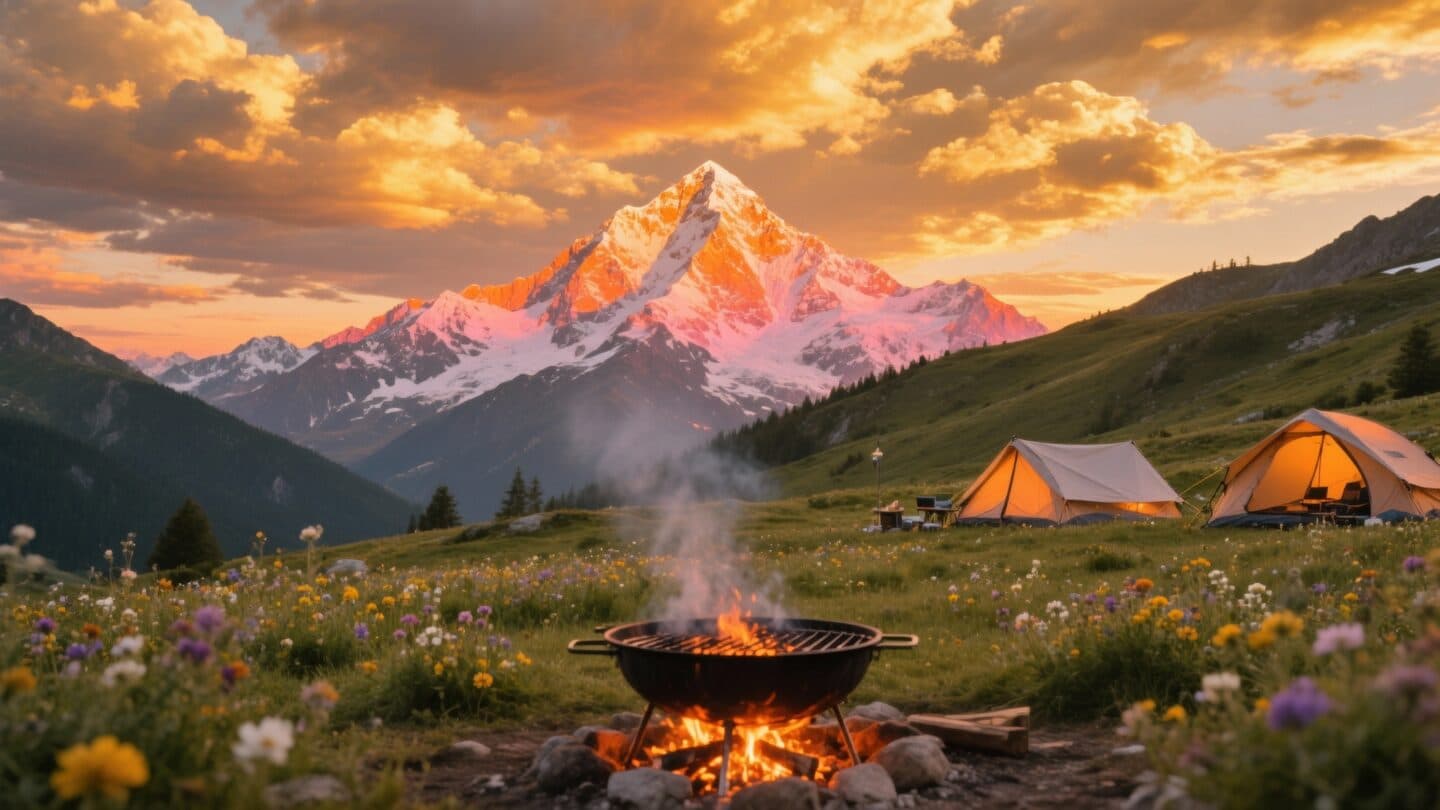
The trail eventually emerged from the forest onto a high viewpoint, and there it was: Haba Snow Mountain, filling the northern sky, its glaciated summit impossibly bright against deep blue, its lower flanks wrapped in dark forest and grey rock. The campsite was set up on a flat meadow facing directly at the mountain — the kind of view that makes you understand why people once worshipped mountains as gods. And there, spread across the meadow, was a BBQ. A proper one. The three staff members had carried all the food and equipment up that morning — charcoal, grill, marinated meats, vegetables, sauces, cold drinks — and were already firing up the coals by the time we arrived. This was the trip's secret weapon: a full outdoor barbecue at 3,500 metres, with Haba Snow Mountain as the backdrop. The guide called it "a little bit wild luxury" and that description was perfect. We ate lamb skewers, grilled chicken wings, charred corn, and vegetables still sizzling from the grill, sitting on camping chairs in the meadow with the snow mountain reflected in the sunlight. Some people played frisbee on the grass. Others just sat and stared at the mountain. A couple of yaks wandered through the edge of the campsite, entirely unbothered by the smoke and laughter. The food was genuinely excellent — the meats well-seasoned, the charcoal giving everything that smoky depth that only outdoor cooking delivers — but it was the setting that elevated it from "good BBQ" to "one of the best meals of my life." Context is everything, and the context here was a snow mountain, a meadow, thin air, tired legs, and the kind of earned satisfaction that only comes after three days of hiking.
After the BBQ, we reluctantly packed up and drove back down the mountain, transferring to our bus for the two-and-a-half-hour journey back to Lijiang. The drive was long, the mountain roads winding, but the bus was quiet in a good way — the kind of silence that settles over a group when everyone is processing something meaningful. I watched the last light fade on the Haba peaks through the window, the snow turning from white to gold to pink to grey, and felt that specific ache you get when something brilliant is almost over. We arrived in Lijiang around 9pm, checked back into the hotel, and several of us went out for a late dinner in the Old Town — hot pot, naturally, because Yunnan hot pot with local mushrooms after three days on a mountain trail is about as close to heaven as food gets. The conversation was the kind you only get after shared physical challenge: honest, warm, slightly giddy, and full of "remember when" stories about switchbacks and sunsets and yaks.
What This Hike Taught Me About China's Mountains
I've thought a lot about Tiger Leaping Gorge since I got home. Not just the views — though they're seared into my memory — but the overall experience of spending four days moving through a landscape at walking pace, watching it change with the light, feeling the altitude in my lungs and the terrain in my legs. There's something that hiking gives you that no drone footage, no Instagram reel, no travel documentary can replicate: the physical knowledge that you earned the view. Every panorama on the High Path was sweeter because my calves were burning. Every star above the guesthouse was brighter because I was too tired to look at my phone. China has a habit of surprising you. Just when you think you've figured out the country — big cities, ancient temples, fast trains — it throws something like Tiger Leaping Gorge at you and says, "Actually, there's also this." A landscape so dramatic it feels geological rather than geographical. A trail that's been walked by backpackers from every country on Earth for decades, yet still feels wild and uncommercialised. A BBQ at 3,500 metres that tastes better than any restaurant meal because the mountain made it so. The Haba secret trail was the revelation, though. The gorge hike is world-famous, and rightly so, but the forest and pasture trek to the snow mountain viewpoint was the part that shifted something in me. The silence, the ancient trees, the yaks drifting through the meadow — it was China's Yunnan at its most quietly extraordinary, a landscape that doesn't need to shout because it knows what it has. If the gorge was the headline act, Haba was the encore that changed the whole concert.
Practical Info: Planning Your Tiger Leaping Gorge Hike
Here's what you need to know to plan this trip: - **Getting there**: Fly to Lijiang (LJG). Direct flights from Kunming, Chengdu, Chongqing, Shanghai, Beijing, and other major cities. Kunming to Lijiang is also possible by high-speed train (about 3.5 hours, ¥220 second class). The gorge is roughly 100km northwest of Lijiang, about a 2-hour drive. - **Best season**: March to June and September to November. Spring (March–May) brings wildflowers and clear skies. Autumn (September–November) has the best visibility for mountain views. July–August is monsoon season — the trail can be muddy and slippery, and landslide risk increases. Winter is cold but spectacular if you're prepared. - **Duration**: The five-day itinerary (including Haba secret trail) is ideal. A stripped-back version covering just the High Path can be done in 2–3 days, but you'd miss the Haba section, which would be a real shame. - **Budget**: Group tours cost ¥2,680–2,880 ($370–400) per person, including all transport from Lijiang, accommodation, most meals, guides, and park entries. Independent hiking is possible too — guesthouses along the trail charge ¥60–150 per night, meals about ¥30–50 each. - **Fitness level**: Moderate. The 28 Switchbacks are the hardest section — 11.5km with 450m of elevation gain over about 6 hours. If you exercise regularly and can handle a full day of uphill walking, you'll be fine. The Haba trail (5km, 300m gain) is gentler. Total trekking over three days is manageable for beginners with reasonable fitness. - **Altitude**: Maximum 3,500m at the Haba viewpoint. Lijiang itself sits at 2,400m. Most people experience no serious altitude effects, but take it easy on the first day, stay hydrated, and avoid alcohol the night before hiking. - **What to pack**: Trekking poles (essential for the switchbacks), hiking shoes with good grip, layers (mountain weather changes fast), waterproof jacket, hat and strong sunscreen (UV is fierce at this altitude), 2–3 litres of water per hiking day, snacks, headlamp, and a small daypack. Main luggage can be left at the hotel in Lijiang. - **Accommodation**: Hotel in Lijiang (4-star), mountain guesthouse in the gorge (basic but clean, 2–2.5 star equivalent), village guesthouse in Haba (basic). Pack expectations accordingly — the mountain nights are about the views, not the thread count. - **Food**: Naxi and Yunnan-style farmhouse cooking. Simple, filling, and honestly good — fresh vegetables, braised meats, rice, and the occasional fiery chilli condiment. The Haba BBQ is a highlight. Budget ¥50–100/day for meals not included in a tour. - **Safety**: Three staff per group (guide, local trekking guide, and logistics support). The trail is well-established but has some exposed and steep sections — follow your guide's instructions, especially on descents. Bring knee supports if you have sensitive joints. The gorge section occasionally has rockfall risk in bad weather; tours will adjust routes accordingly.
Download offline maps before you leave Lijiang — cell signal is patchy on the High Path and non-existent in some sections of the Haba trail. WeChat Pay works in Lijiang and at most guesthouses, but carry some cash (¥200–300) for trail-side supply stops and village shops.
Book hiking and outdoor activities in Yunnan — Tiger Leaping Gorge treks, snow mountain tours, and more.
Prices compared via ChinaCheapo. We may earn a commission at no extra cost to you.
Browse ActivitiesCompare hotels in Lijiang — from Old Town boutiques to modern city hotels near the airport.
Prices compared via Trip.com. We may earn a commission at no extra cost to you.
Compare Hotels