I'll admit it — I'd never heard of Quanzhou before I started planning this trip. Beijing, Shanghai, Chengdu, sure. But Quanzhou? It wasn't on the radar. Then I started reading, and within about twenty minutes I was rearranging my entire Fujian itinerary around a city that Marco Polo once described as one of the greatest ports in the world. A city where Buddhist temples sit shoulder-to-shoulder with a thousand-year-old Arab mosque. Where Hindu stone carvings are embedded in the walls of a Chinese temple. Where fisherwomen wear towers of fresh flowers in their hair and live in houses built from oyster shells. Where the local music is literally classified as a "living fossil" of Chinese civilization. In 2021, UNESCO inscribed "Quanzhou: Emporium of the World in Song-Yuan China" as a World Heritage Site, recognising what locals have known for centuries — this city is one of the most extraordinary cultural crossroads on Earth. During the Song and Yuan dynasties (roughly 960–1368), Quanzhou was the starting point of the Maritime Silk Road, a port so vast and cosmopolitan that traders from Arabia, Persia, India, and Southeast Asia lived here permanently, built their own places of worship, married local families, and wove their cultures into the fabric of the city. The result, walking around Quanzhou today, is something I've genuinely never experienced anywhere else: a Chinese city where you can visit a Buddhist temple, an Islamic mosque, a Confucian shrine, and remnants of Hindu and Manichaean worship sites all within a single morning's walk. Quanzhou calls itself the "World Religious Museum," and honestly, that's not marketing hyperbole. It's just what the place is. Add in some of the best food in Fujian, a puppet theater tradition that'll make you forget you're watching wooden hands, and a fishing village where the women look like they're wearing botanical gardens on their heads — and you've got four days of the most surprising, layered, emotionally rich travel I've done in China.
Day 1: The Citywalk — Where Every God Gets a Front Door
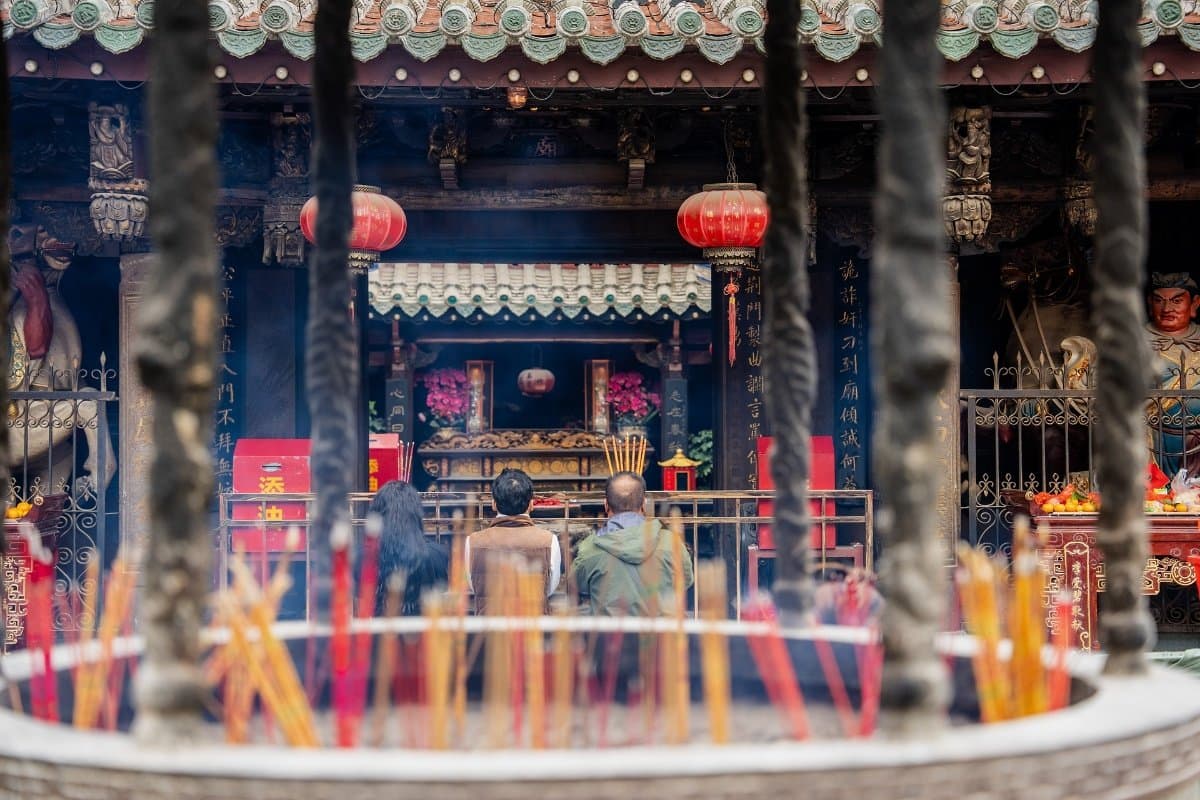
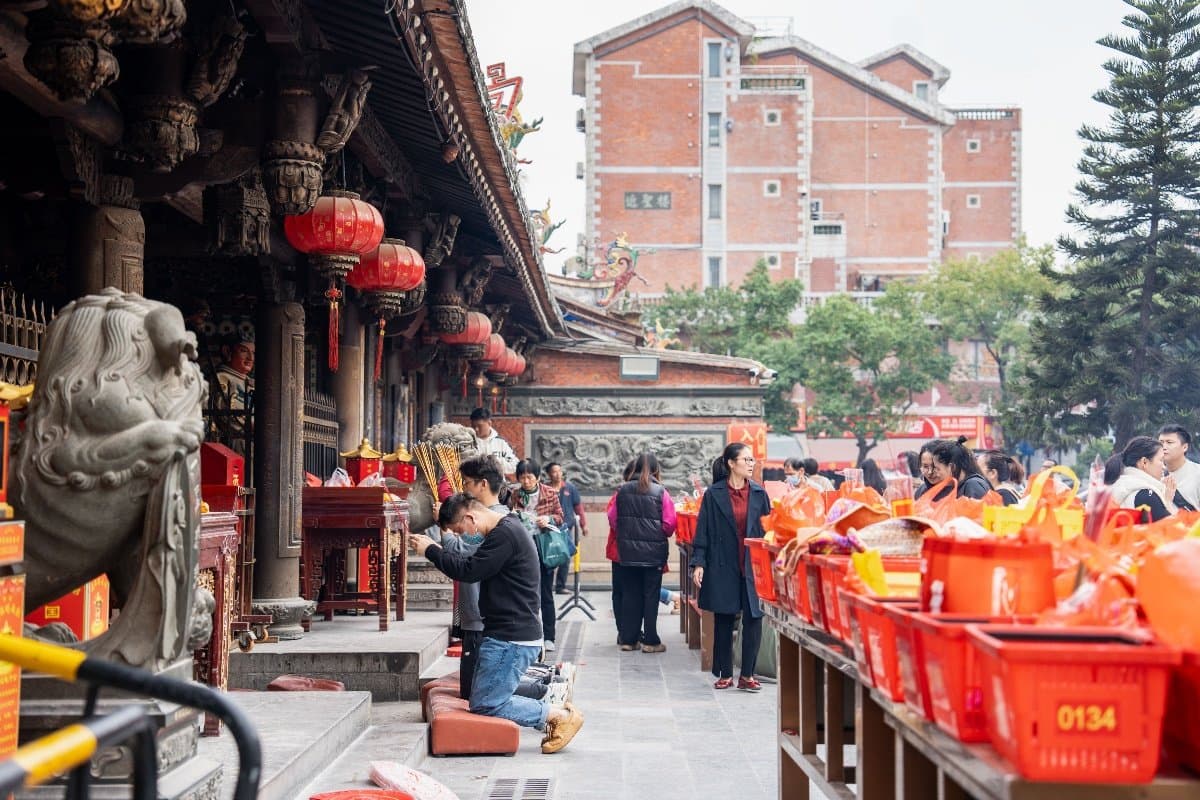
The old city of Quanzhou is best explored on foot — and I mean that literally, because the most important sites are clustered so close together that you could hit three different religions in the time it takes to finish an iced tea. Our walk started on Tumen Street (涂门街), one of the city's oldest commercial roads, and the density of sacred architecture here is almost absurd. First stop: Guanyue Temple (关岳庙), the largest temple dedicated to Guan Yu — the deified Three Kingdoms general — in all of Fujian province. The moment you step through the gate, you're hit with a wall of incense smoke so thick it's practically a weather system. Locals were everywhere — not tourists performing religiosity for Instagram, but actual worshippers: elderly women throwing divination blocks on the stone floor with the casual expertise of someone who's been consulting the gods since before you were born, middle-aged men lighting incense bundles the size of small torches, teenagers asking Guan Yu for help with their university entrance exams. The clatter of wooden blocks hitting stone, the murmur of prayers, the snap and hiss of incense — Guanyue Temple is not a museum piece. It's a living, breathing, smoke-filled engine of faith. Walk fifty metres east and you're standing in front of Qingjing Mosque (清净寺), built in 1009 AD during the Northern Song dynasty — the oldest Arab-style mosque in China, and one of the oldest in the world outside the Middle East. Let that sink in for a second. A thousand-year-old Islamic place of worship, right here on a busy street in southeastern China, flanked by a Guan Yu temple on one side and a string of bubble tea shops on the other. The original stone gate — a massive, weathered arch of granite blocks — still stands, and walking through it felt like stepping through a portal. The main prayer hall is a ruin now, open to the sky, with stone walls that have been standing since Arab merchants sailed into Quanzhou harbour when Europe was still in the Dark Ages. A newer prayer hall operates beside it, still active, still serving the city's Muslim community. The coexistence is so casual it almost doesn't register — until you step back and think about what you're looking at. A Buddhist city where a medieval mosque has been worshipped in, continuously, for over a millennium.
Kaiyuan Temple: The Crown Jewel
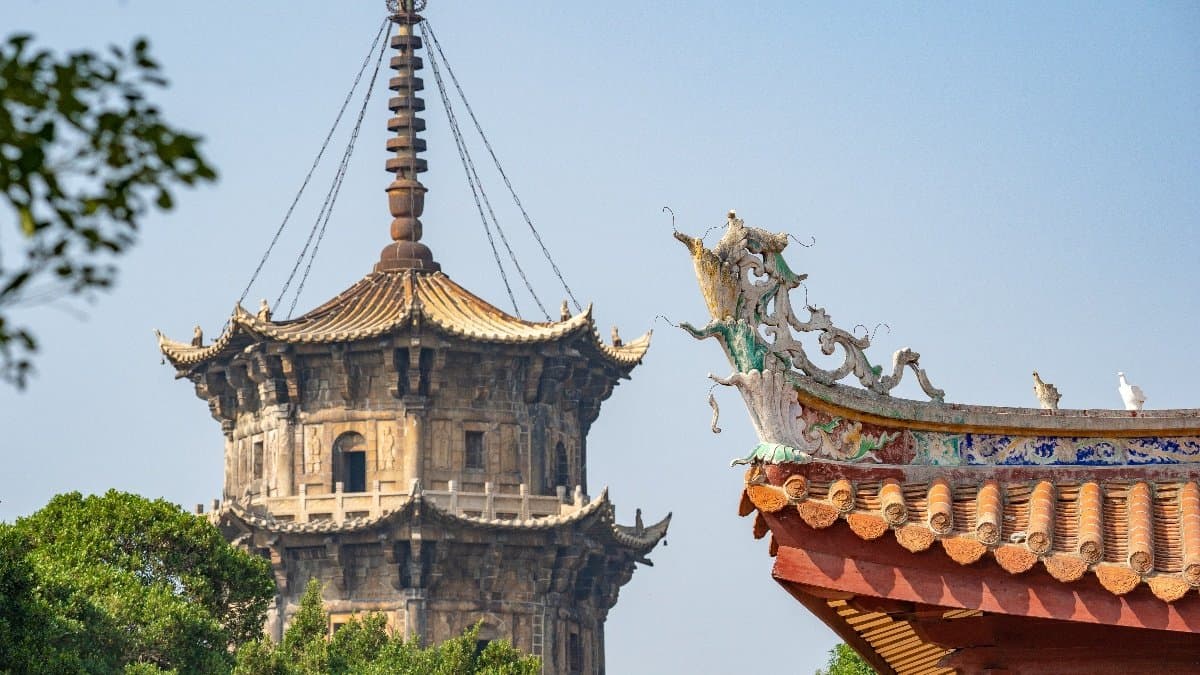
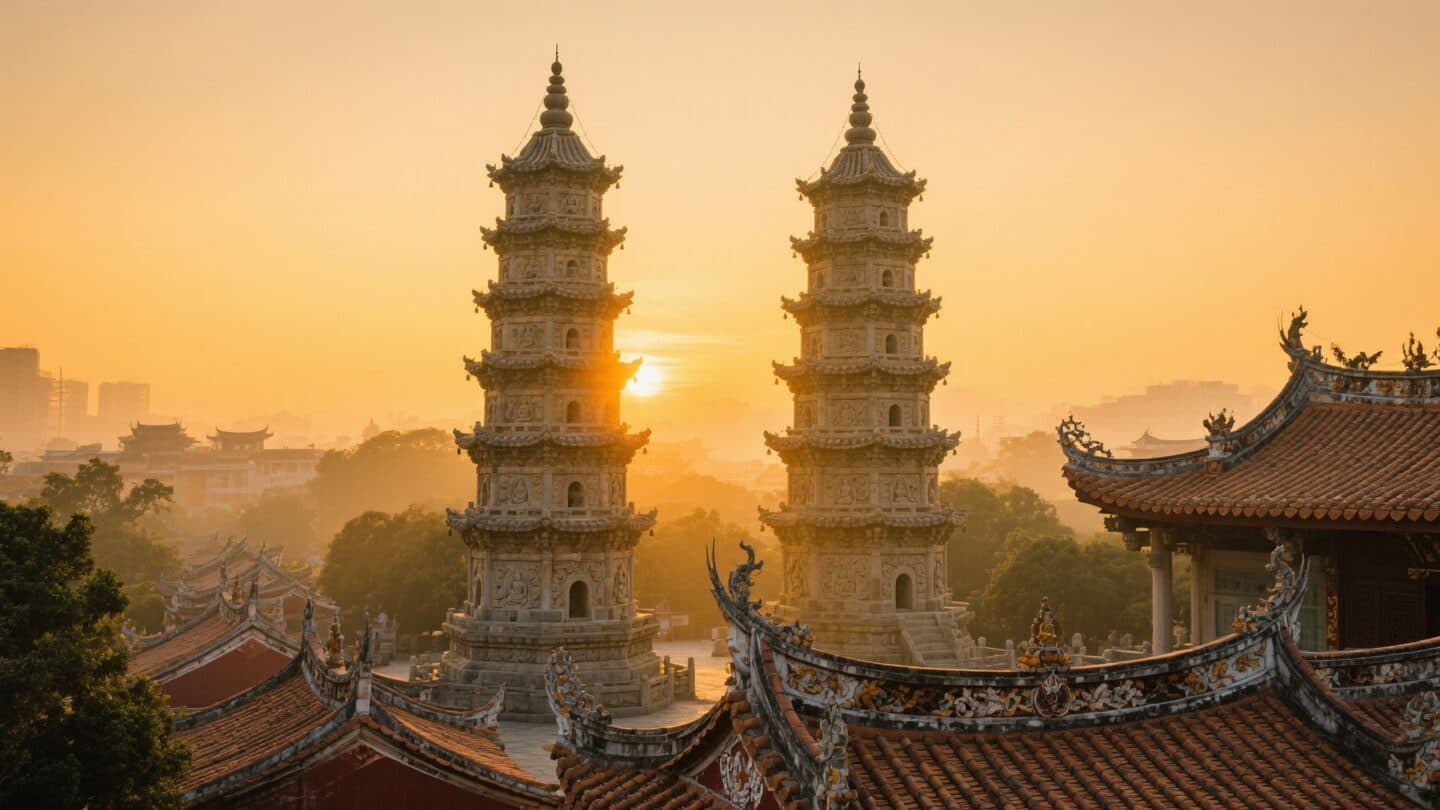
The afternoon took us to the western end of West Street (西街) and through the gates of Kaiyuan Temple (开元寺), and this is where Quanzhou stops being interesting and starts being genuinely extraordinary. Kaiyuan is one of the most important Buddhist temples in southeastern China, founded in 686 AD during the Tang dynasty. But what makes it unique — what makes it unlike any other Buddhist temple I've visited in China — is its twin stone pagodas. The East Pagoda (镇国塔) and West Pagoda (仁寿塔) are the tallest surviving stone pagodas in China, built during the Song dynasty, and they are spectacularly beautiful. Five storeys of intricately carved granite, tapering into the sky, covered in relief sculptures of Buddhist figures, guardians, musicians, and animals. They've survived earthquakes, typhoons, and nearly a thousand years of coastal weather, and they look like they could stand for a thousand more. I stood at the base of the East Pagoda and craned my neck upward, and the level of detail in the carvings — individual fingers on tiny stone musicians, the folds of robes on warrior guardians, the feathers on mythological birds — was staggering. This was Song dynasty craftsmanship at its absolute peak. But here's the thing that really got me: embedded in the walls and columns of Kaiyuan Temple's main hall are Hindu stone carvings. Actual Hindu deities — Vishnu, flying apsaras, and lion-headed figures — repurposed from an earlier Hindu temple that once stood on this site or nearby, now built directly into the structure of a Buddhist temple. Nobody removed them or plastered over them. They're just there, coexisting with the Buddha statues, as if different civilizations decided to share a building the way flatmates share a kitchen. This kind of cross-cultural archaeological layering is what earned Quanzhou its UNESCO inscription, and seeing it in person — Hindu gods gazing serenely from the columns of a Chinese Buddhist hall — is one of those moments where history stops being a textbook concept and becomes viscerally, physically real.
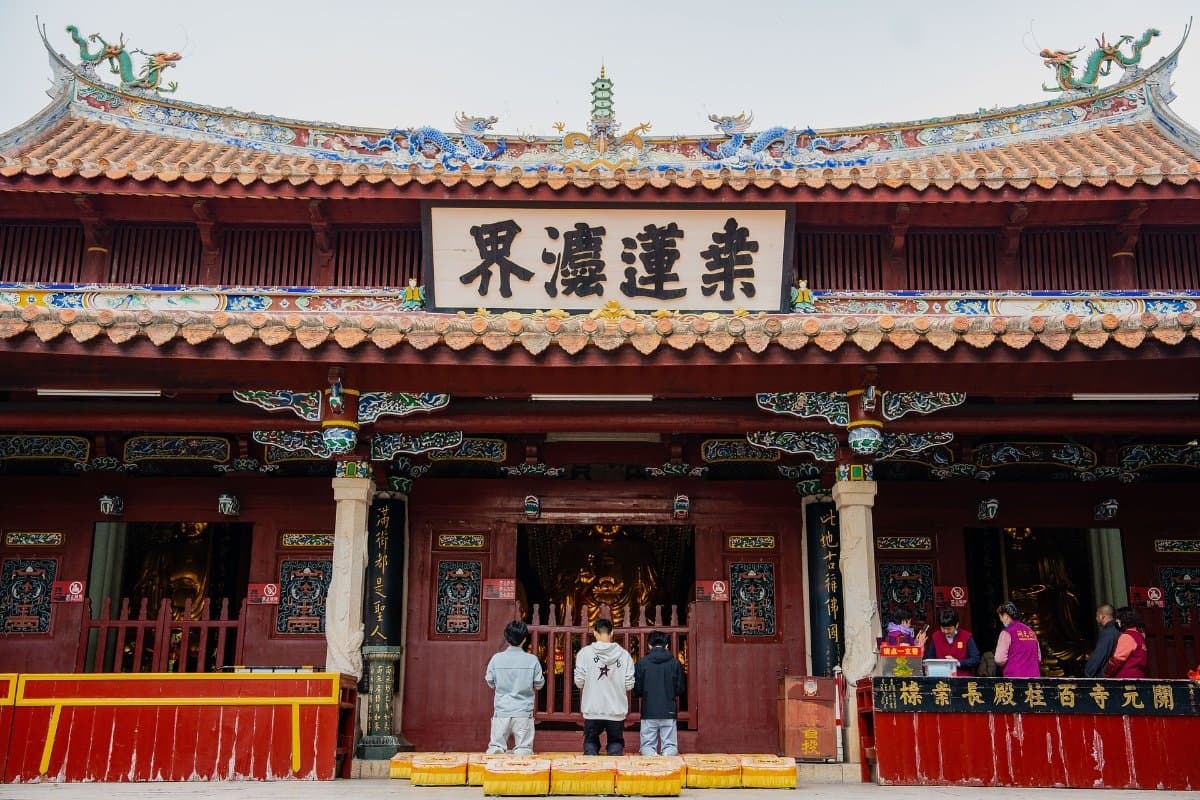
The citywalk covers about 4 kilometres on foot and takes 4-5 hours at a comfortable pace. Wear good shoes — the old city streets are uneven in places. Kaiyuan Temple is free to enter. Qingjing Mosque charges a small entry fee (around 3 RMB). Guanyue Temple is free.
The Food: Ginger Duck, Curry Beef, and Why Quanzhou Deserves a Michelin Guide
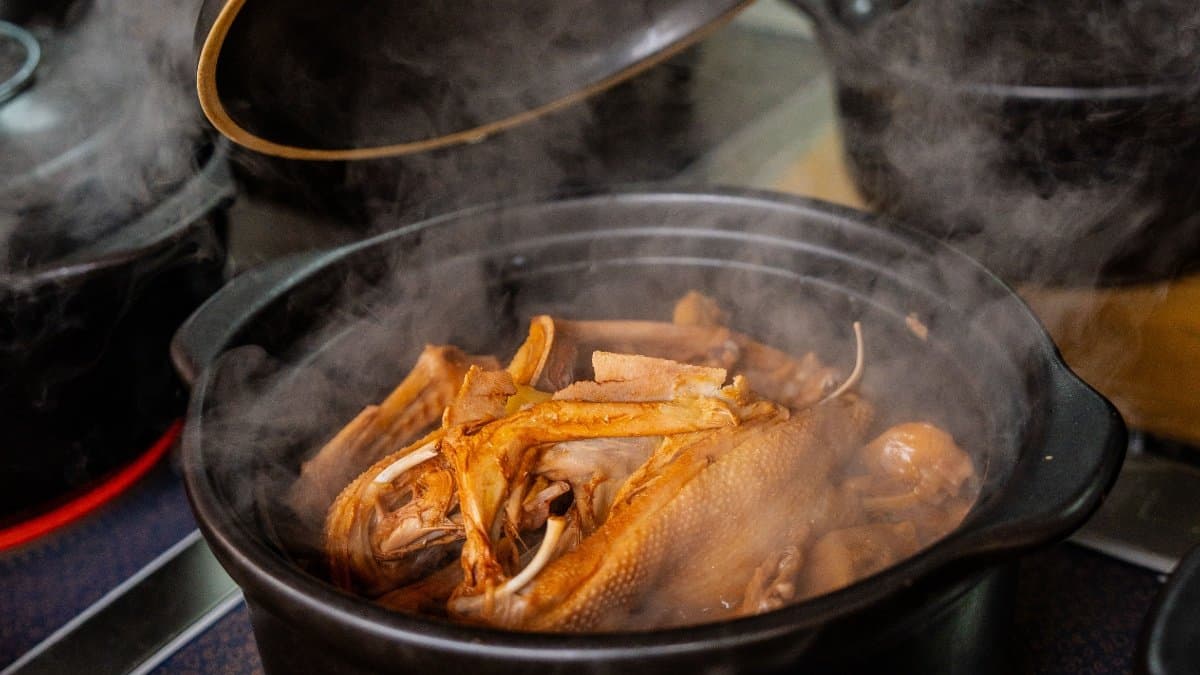
Let me talk about the food, because Quanzhou food nearly derailed the entire cultural itinerary. Minnan cuisine (闽南菜) — the cooking tradition of southern Fujian — is wildly underappreciated outside of China. It's gentler than Sichuan, more seafood-forward than Cantonese, and obsessed with slow-cooked, deeply flavoured dishes that taste like someone's grandmother spent all day in the kitchen. Which, in many cases, is exactly what happened. The two signature dishes are ginger duck (姜母鸭) and curry beef steak (咖喱牛排), and both of them rewired my brain. Ginger duck is a whole duck simmered for hours in sesame oil with an almost reckless amount of old ginger, rice wine, and Chinese herbs. The result is this dark, intensely aromatic stew where the duck meat falls apart at the touch of chopsticks and the ginger has mellowed from sharp and spicy to sweet, warm, and almost medicinal. It's comfort food at a molecular level. I ate it on day two and immediately wanted it again on day three. The curry beef steak is Quanzhou's other culinary surprise — and the name is misleading, because this isn't a Western steak and it isn't Indian curry. It's a thick slab of slow-braised beef in a Minnan-style curry sauce that traces its roots directly back to the Maritime Silk Road. Arab and Southeast Asian traders brought curry spices to Quanzhou centuries ago, and local cooks did what local cooks always do: adapted it into something entirely their own. The beef is tender enough to cut with chopsticks, the sauce is fragrant with turmeric, cumin, and a hint of sweetness, and it comes with steamed rice and pickled vegetables on the side. I had it at a packed old-city restaurant that our guide had booked in advance — apparently the queue at peak hours is legendary — and it was one of the best meals I've had in China, full stop. Beyond the big two, the old city is a grazer's paradise. Fried mantou buns stuffed with taro paste. Oyster omelettes from street carts. Mianxian hu — a thick, soupy noodle dish with a base of pork bone broth that locals eat for breakfast and honestly, I'd eat for every meal. Quanzhou hasn't been discovered by the international food tourism circuit yet, and the prices reflect that — a full lunch for two with ginger duck, curry beef, sides, and drinks came to about 120 RMB ($17). That's absurd.
Find flights to Quanzhou — Jinjiang Airport serves all major Chinese cities with frequent connections.
Prices compared via Trip.com. We may earn a commission at no extra cost to you.
Search FlightsTea, Dice, and the Art of "Bo Bing"
After the citywalk, we retreated to a traditional tea house tucked inside the old city — one of those places with wooden furniture worn smooth by decades of elbows, where the owner brews tea with the focused precision of a surgeon and the conversation flows as freely as the oolong. Fujian is the spiritual heartland of Chinese tea culture. Tieguanyin, one of the most famous oolong teas in the world, comes from Anxi county, just an hour from Quanzhou, and drinking it here — on its home turf, brewed properly in a gaiwan, poured from a height into tiny cups — is a completely different experience from whatever you've been drinking from a teabag at home. But the tea house wasn't just about tea. Our guide introduced us to "bo bing" (博饼), a traditional Minnan dice game that dates back to the Mid-Autumn Festival customs of the region. The rules are simple: you take turns rolling six dice into a porcelain bowl, and the combination determines your prize — from small treats up to the coveted "zhuangyuan" (状元), the grand champion roll. It evolved from old moon-worship rituals, but in practice it plays like a combination of Yahtzee and a very spirited pub game. The table was banging with excitement within minutes. One woman in our group rolled a perfect zhuangyuan on her third turn and the entire tea house erupted. The phrase they kept shouting — "ai pia cai e yia" (爱拼才会赢) — roughly translates as "you only win if you dare to try." It's the unofficial motto of Minnan culture, and watching a group of strangers bond over dice and tea in a centuries-old tea house, I understood why. There's something about Quanzhou that makes people open up. Maybe it's the tea. Maybe it's the history. Maybe it's the gods — all of them, watching from every street corner.
Nanyin and Puppet Theater: The Living Fossils
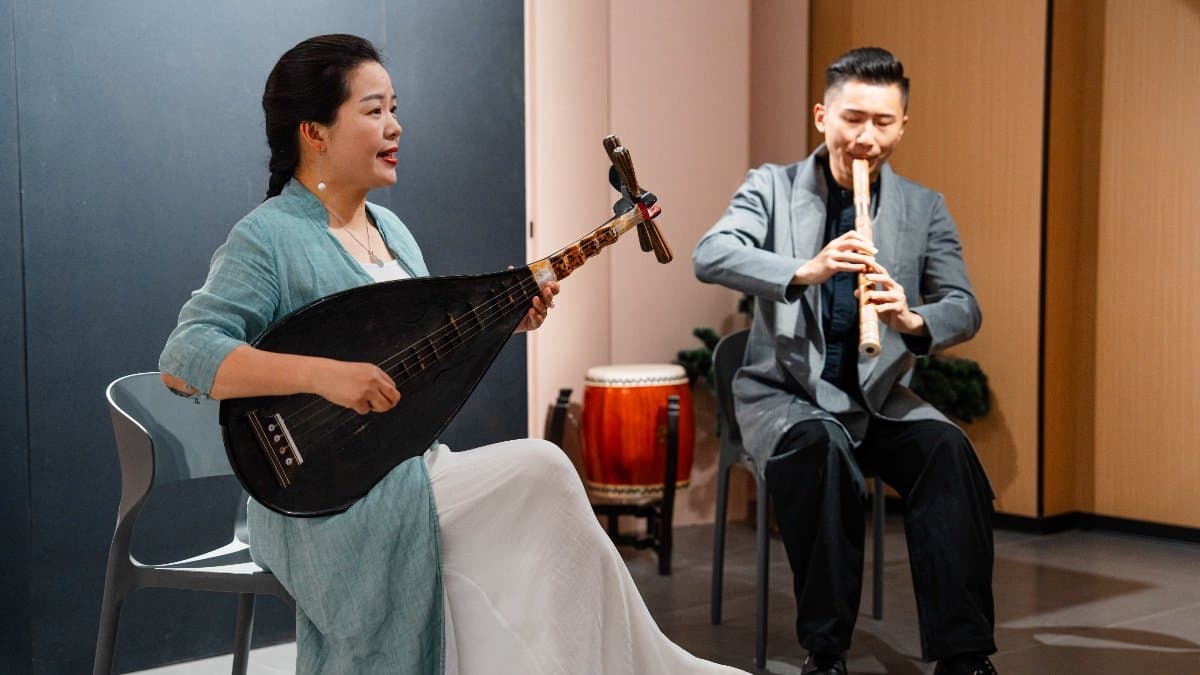
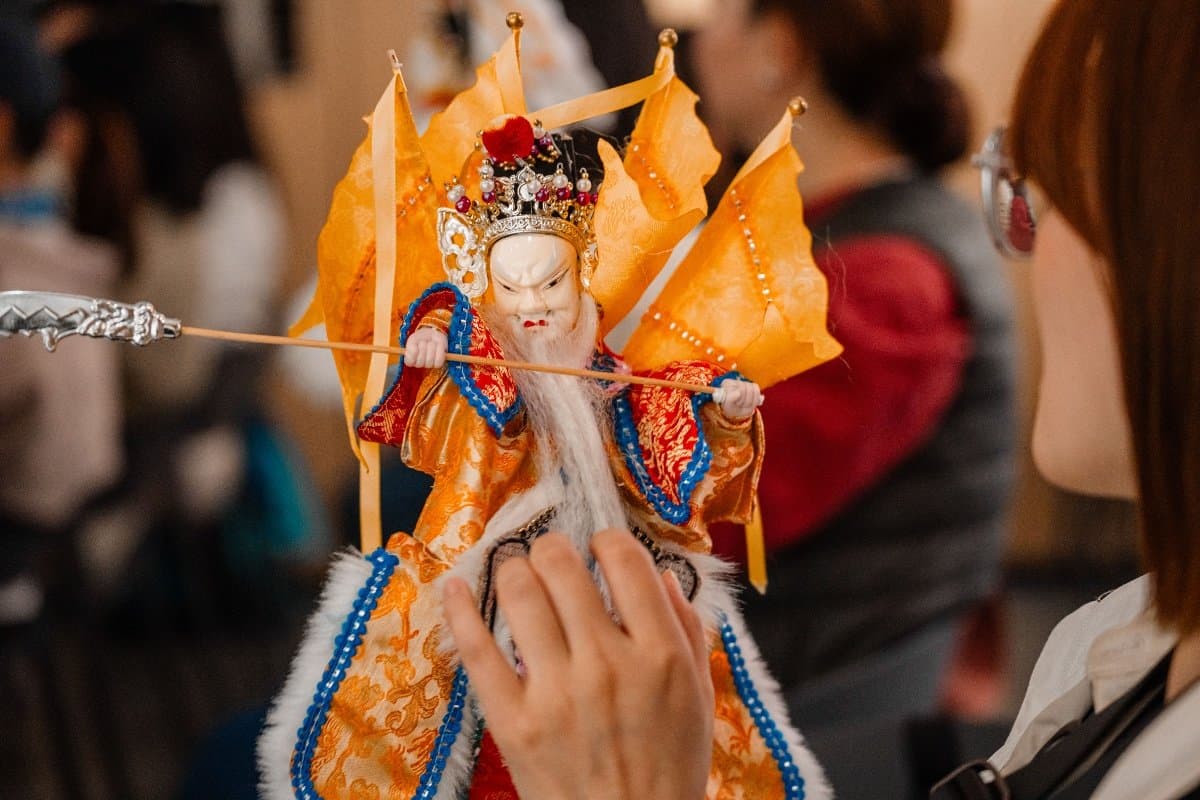
The evening brought what was, for me, the emotional peak of the entire trip. We walked to a small theater set in a former Song dynasty postal station — an actual thousand-year-old building repurposed as a performance space — and sat down for a double bill of Nanyin music and hand puppet theater. Nanyin (南音) is classified by UNESCO as an Intangible Cultural Heritage, and musicologists call it the "living fossil of Chinese music." It's the oldest surviving form of traditional Chinese music, with roots stretching back to the Han dynasty, preserved in Quanzhou because the Minnan dialect kept the ancient pronunciations alive while the rest of China's languages evolved around them. The instruments — a curved-neck pipa held horizontally, a two-stringed erhu variant called the erxian, a bamboo flute, wooden clappers — haven't changed in centuries. The melodies are slow, ornamental, achingly beautiful. The singer's voice floated through the stone-walled room like smoke, and the audience — our group plus a handful of elderly locals — sat in absolute silence. Nobody checked their phone. Nobody whispered. The music commanded a kind of reverence that I've only ever experienced in a cathedral. I don't speak Minnan dialect. I didn't understand a word of what was being sung. And yet — and I know this sounds like travel-writer cliche, but I swear it's true — I felt it. The longing, the beauty, the weight of deep time. Nanyin doesn't perform emotion; it transmits it. Sitting in that ancient room, listening to music that has been played in this city for a thousand years, I had one of those rare travel moments where you feel the full span of human civilization pressing in on you from all sides. The hand puppet theater (掌中木偶戏) that followed was a total tonal shift — lively, funny, technically astonishing. A single puppeteer operated multiple characters on a tiny stage, each puppet no bigger than a hand, and the level of expression he coaxed from those carved wooden faces was remarkable. Fight scenes, love scenes, comedy scenes — all performed with fingers and wrists moving so fast they blurred. The audience was laughing and clapping within minutes. We even got to try operating the puppets ourselves afterward, and I can report that making a wooden figure walk convincingly across a stage is approximately ten thousand times harder than it looks. Mine kept face-planting. The puppeteer smiled patiently and adjusted my grip. "Thirty years of practice," he said. "Then it becomes easy."
Day 2: The Maritime Silk Road Museum — Ships, Trade, and a Window to the World
Day two opened with a visit to the Quanzhou Maritime Silk Road Museum (泉州海外交通史博物馆), commonly known as the "Hai Jiao Guan," and it's the kind of museum that fundamentally changes how you think about Chinese history. Most Western narratives frame China as historically inward-looking — the Great Wall, the Forbidden City, the self-sufficient Middle Kingdom. The Maritime Silk Road Museum obliterates that narrative within about fifteen minutes. This is China's only museum dedicated entirely to overseas maritime trade, and it's stunning. The centrepiece is a Song dynasty merchant ship excavated from Quanzhou harbour — a massive wooden vessel, remarkably preserved, that once sailed the trade routes to Southeast Asia, India, and the Persian Gulf carrying silk, porcelain, and tea. Standing in front of it, you're looking at physical proof that Chinese merchants were running a sophisticated global trading network centuries before the European Age of Exploration. The museum's collection of foreign religious stone carvings is equally extraordinary. Arabic calligraphy from medieval gravestones. Hindu deity reliefs. Nestorian Christian crosses. Manichaean fragments. These weren't imported museum pieces — they were found in Quanzhou, because the people who made them lived here. The exhibition traces the human story behind the trade: the Arab merchants who settled in Quanzhou during the Song dynasty and built the city's mosques, the Indian traders who brought Hinduism and left their gods carved in stone, the Persian communities whose influence can still be detected in local cuisine and vocabulary. Our guide — a museum lecturer who clearly lived for this subject — spent three hours walking us through the collection, and I could have stayed for three more. Every artefact told a story of connection, exchange, and the astonishing cosmopolitanism of medieval Quanzhou.
Xunpu Village: Flower Crowns and Oyster Shell Houses
From the museum, we drove about thirty minutes east to Xunpu (蟳埔), a coastal fishing village that felt like stepping into a completely different world. Xunpu is famous for two things: "zanhua wei" (簪花围), the elaborate flower crown headpieces worn by local women, and "hao zhai" (蚝宅), houses built from oyster shells cemented together into sturdy, shimmering walls. The zanhua wei tradition is genuinely breathtaking. Xunpu women — from teenagers to great-grandmothers — weave circles of fresh flowers into their hair: jasmine, chrysanthemums, orchids, seasonal wildflowers, layered in concentric rings and secured with ornamental pins. The effect is somewhere between a botanical garden and a jewellery shop, and it's not done for tourists — this is everyday wear. Women heading to the fish market, women sitting outside their front doors shelling oysters, women riding electric scooters through the village lanes — all of them with these magnificent flower arrangements perched on their heads like living crowns. They're classified as one of Fujian's "Three Great Fisherwomen" traditions, and in recent years the zanhua wei has gone viral on Chinese social media, drawing visitors from across the country who come to have the flowers arranged in their own hair. We did it too. An elderly woman — an "a-ma" (grandmother) — sat me down on a wooden stool outside her house, pulled out a basket of fresh flowers, and spent about ten minutes weaving a crown into my hair with the speed and confidence of someone who has done this approximately forty thousand times. The flowers smelled incredible. I looked ridiculous. I loved it. The oyster shell houses are the other half of Xunpu's magic. Walking through the village lanes, you're surrounded by walls built from thousands of oyster shells — whole shells, halved shells, fragments, all cemented together in rough patterns that catch the light and give the entire village a strange, pearlescent glow. The technique dates back centuries, when Xunpu's fishermen discovered that oyster shells were waterproof, windproof, and essentially free. Some of these houses are hundreds of years old, their shell walls worn smooth by weather and time, and they're still lived in. The lanes between them are narrow and winding, draped with laundry and fishing nets, and the overall effect is deeply atmospheric — like a fishing village designed by an architect who was also a marine biologist.
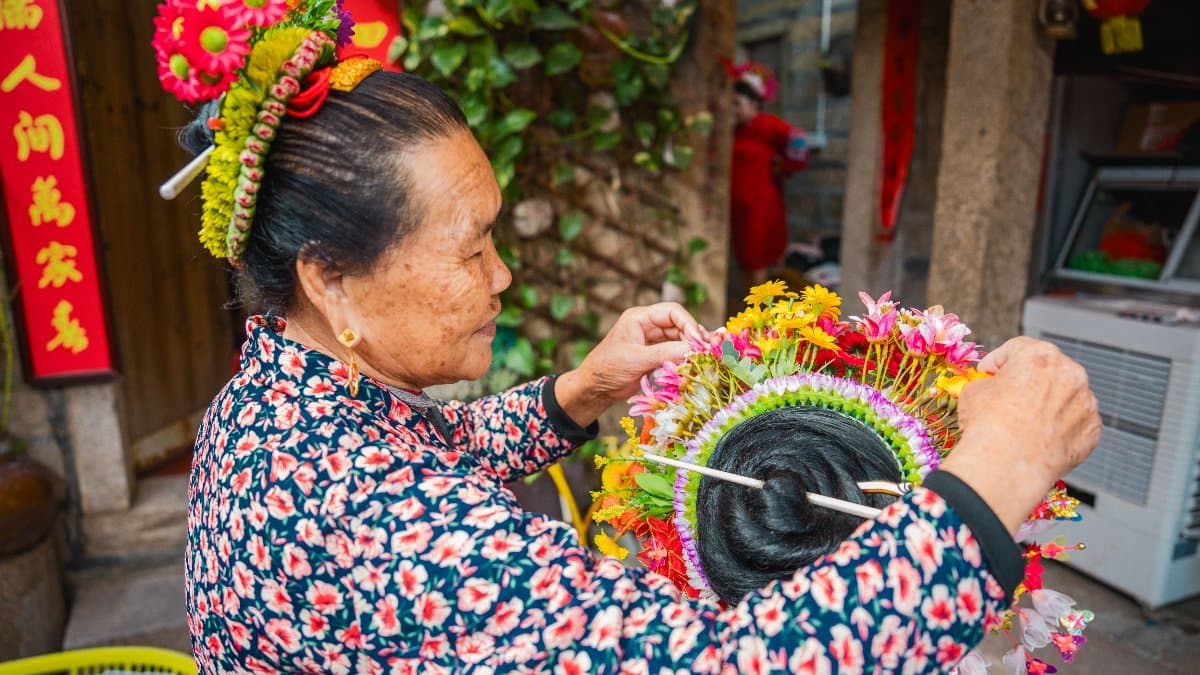
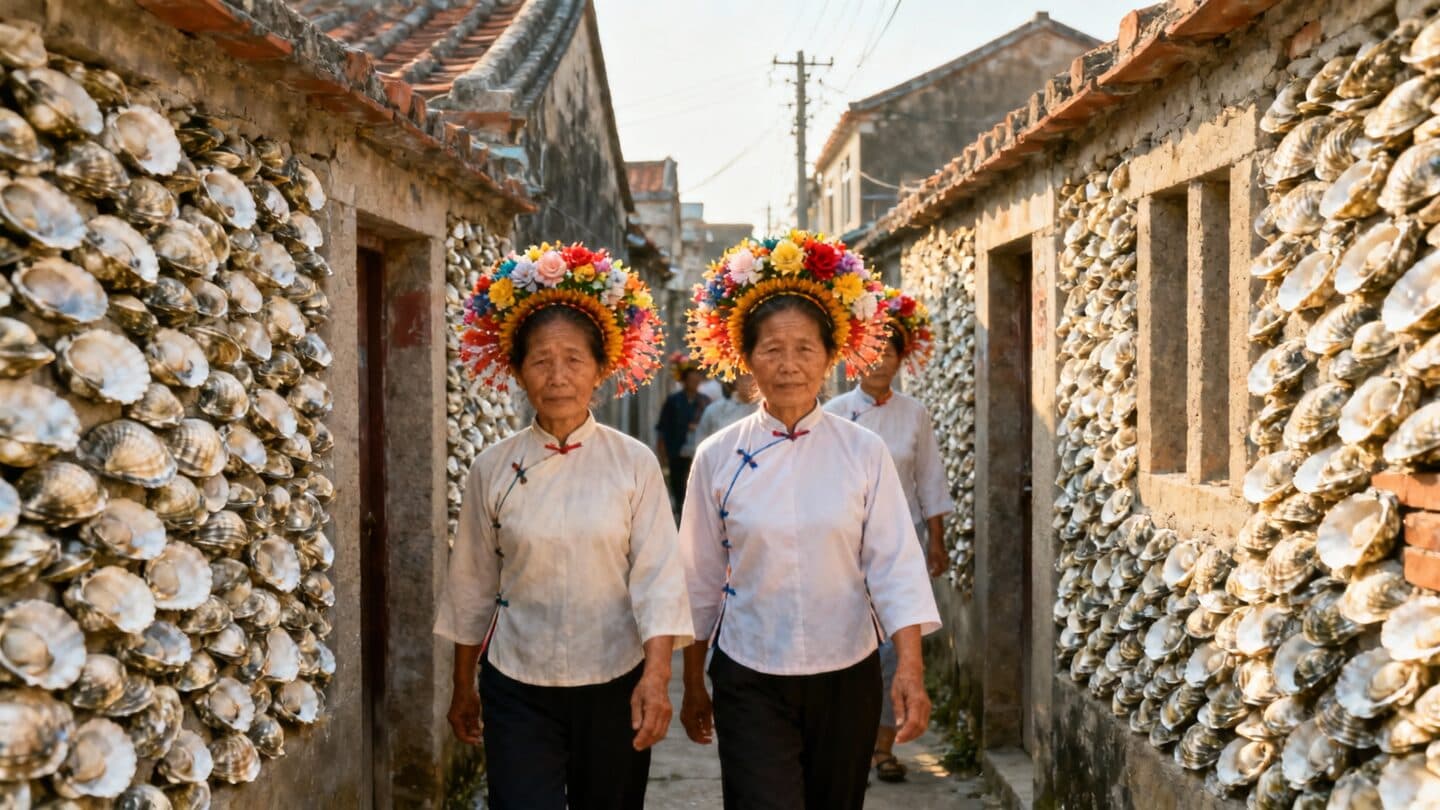
Getting zanhua wei done by a local costs about 20-50 RMB depending on the flowers and complexity. The experience takes about 10-15 minutes. You can also choose to dress up in an Arabian robe — a nod to the village's historical connections with Arab traders — for photos among the oyster shell houses.
Luoyang Bridge: A Song Dynasty Engineering Marvel
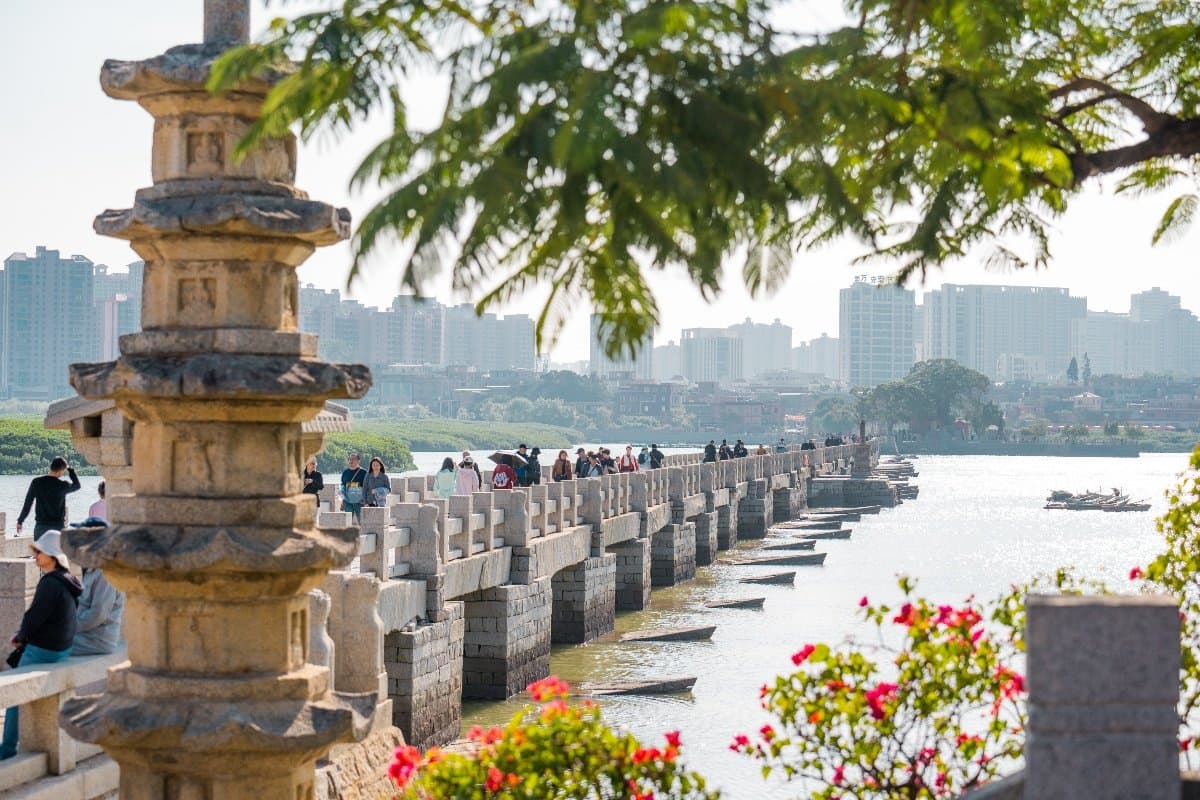
Late afternoon on day two brought us to Luoyang Bridge (洛阳桥), and this is one of those places that makes you re-evaluate everything you thought you knew about medieval engineering. Built between 1053 and 1059 AD during the Northern Song dynasty, Luoyang Bridge stretches over 800 metres across the Luo River estuary — a tidal zone where freshwater meets the sea, where currents shift and surge with every tide, and where, in the eleventh century, a government official named Cai Xiang decided to build something that would outlast him by a millennium. He succeeded. Luoyang Bridge is ranked alongside Beijing's Lugou Bridge, Hebei's Zhaozhou Bridge, and Chaozhou's Guangji Bridge as one of China's four great ancient bridges. But what makes it truly remarkable is the construction technique. Cai Xiang pioneered a method called "breeding oysters to reinforce the base" (种蛎固基) — he deliberately cultivated oyster colonies on the stone foundations, allowing the shells to grow over and cement the base stones together into a natural, sea-resistant bond. He also invented a "floating transport" method (浮运架梁) to move the massive stone beams into position using the tidal current itself. These were engineering innovations that wouldn't be replicated in Europe for centuries. Walking across Luoyang Bridge at sunset was one of the trip's great moments. The stone guardrails are carved with lions and warriors, weathered and smoothed by nearly a thousand years of wind and rain. The estuary stretched wide on both sides, glinting gold in the late light. Fishing boats bobbed at anchor. A few locals were fishing off the bridge with the unhurried contentment of people who've been doing this their whole lives. At the far end, stone statues of guardian figures stand watch — Song dynasty sentinels still keeping an eye on the water. I stood at the midpoint and looked down at the oyster-encrusted foundation stones, still doing their job after nine hundred and sixty-odd years, and felt a surge of admiration for the sheer audacity of medieval Chinese engineering.
Day 3: Wulin Village — 600 Years of Going Overseas and Coming Home
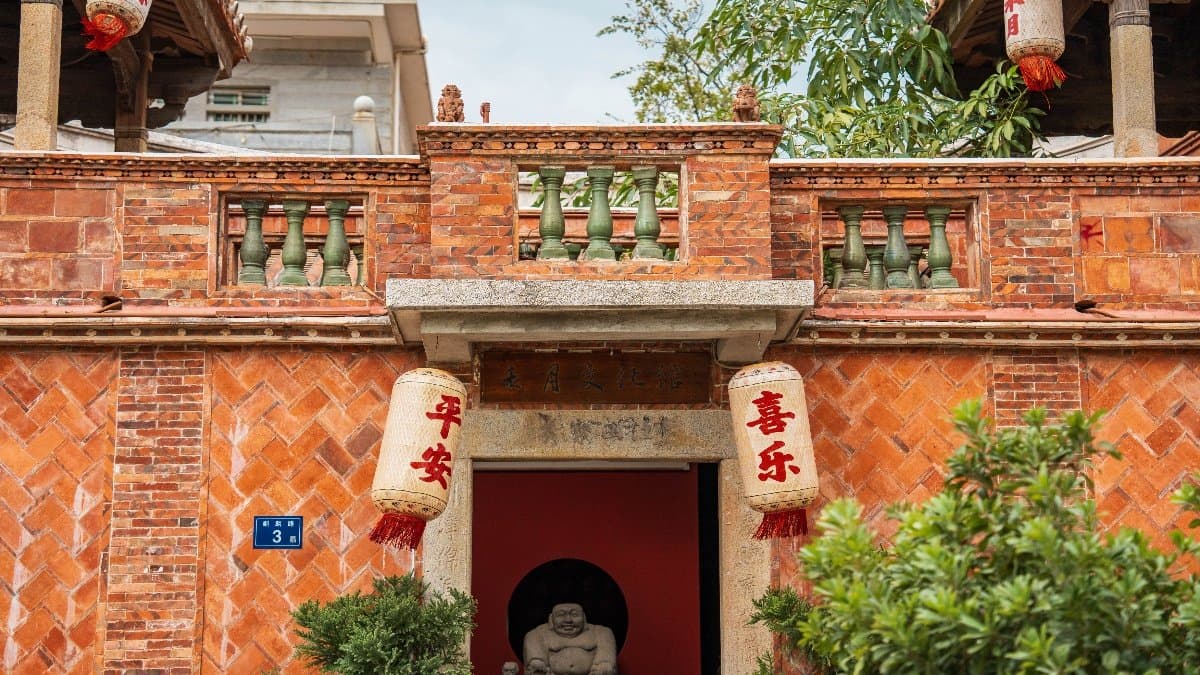
The final morning took us to Wulin village (梧林村) in nearby Jinjiang, and it was the perfect emotional bookend to the trip. Wulin is a 600-year-old settlement that tells the story of southern Fujian's greatest cultural export: its people. For centuries, Minnan families sent their sons across the seas to Southeast Asia — the Philippines, Indonesia, Malaysia, Singapore — to trade, work, and build new lives. They called it "going down to the Southern Seas" (下南洋), and the evidence of their success is written all over Wulin village in bricks and mortar. The village is a living architectural museum. Walk down any lane and you'll pass traditional Minnan red-brick houses with their distinctive "swallow-tail" ridgeline roofs sitting next to Western-influenced Republican-era mansions built by overseas Chinese who made their fortunes abroad and sent money home to build grand houses for their families. There are ninety-nine grand residences (大厝) here, each one reflecting the aesthetic tastes and cultural influences its builder absorbed overseas — European columns, Southeast Asian tile work, Art Deco flourishes, all grafted onto a fundamentally Minnan architectural vocabulary. The result is utterly unique: a village that looks like someone shuffled three continents of architectural history together and laid them out along a single street. Our local guide walked us through the key buildings, and the stories behind them were as compelling as the architecture. The Chaodonglou — a building whose exterior walls are crumbling but whose interior murals still blaze with colour — was built by a man who made his fortune in the Philippines and sent every cent home. The De'long residence sits under a massive banyan tree, its courtyard still arranged exactly as it was a hundred years ago. The "Patriotic Building" (胸怀祖国楼) has twin peacocks carved above its door — a symbol of the builder's love for the country he left behind and the one he returned to. These weren't just houses. They were love letters in architecture, written by men who crossed oceans and never forgot where they came from. I sat on a stone bench in the village square afterward, under the shade of a tree that has apparently been there for centuries, and thought about the arc of this trip. Quanzhou is a city built on departures and arrivals — ships leaving for Arabia and India, traders arriving from Persia and Southeast Asia, sons going overseas and sending their hearts home in the form of buildings. Every site we visited was a monument to connection, exchange, and the fundamental human need to reach across water and find someone else. The Maritime Silk Road wasn't just a trade route. It was a conversation. And Quanzhou was where everyone gathered to talk.
Practical Info: Everything You Need to Know
Quanzhou is surprisingly easy to reach and remarkably affordable once you're there. Here's what you need to plan your trip: - Getting there: Quanzhou has its own airport (Jinjiang International Airport, JJN) with flights from all major Chinese cities. High-speed rail connects to Quanzhou Station, Quanzhou East Station, and Quanzhou South Station — direct trains from Shanghai (5-6 hours), Beijing (8-9 hours), and Guangzhou (3-4 hours). Quanzhou Station is closest to the old city. - Best time to visit: March to May and September to November. Summers are hot and humid (35C+). The Mid-Autumn Festival period (usually September/October) is special — that's when bo bing dice culture peaks citywide. - Budget: Quanzhou is very affordable by Chinese city standards. Budget hotels in the old city run 150-300 RMB/night ($21-42). Street food meals are 15-30 RMB. Restaurant meals for two run 100-200 RMB. Most temples and sites are free or nearly free. - Getting around: The old city is best explored on foot. Taxis and ride-hailing apps (Didi) cover everything else. Day trips to Xunpu, Luoyang Bridge, and Wulin are 20-40 minutes by car. - Language: Mandarin is spoken everywhere, but the local language is Minnan (Southern Min / Hokkien). English is limited — download a translation app and learn a few Mandarin basics. - Organised tours: The trip described here was based on a 4-day organised cultural immersion route priced at 2,980-3,580 RMB ($420-505) per person, including 3 nights hotel, guided citywalk, Nanyin and puppet theater performance, museum guides, zanhua wei experience, and 5 included meals. Group size maxes out at 20 people, ages 20-45. All transport within the itinerary is included. - How long to stay: Four days is ideal for the core experience. If you have extra time, the nearby coastal city of Xiamen is just 30 minutes by high-speed rail — combine the two for a week-long Fujian trip. - Don't miss: The old city at night. After the tourist crowds thin out, the temples light up, the street food stalls fire up their woks, and West Street fills with locals doing what Quanzhou locals do best — eating, talking, and living at a pace that the rest of China has forgotten.
Find hotels in Quanzhou old city — stay close to the temples, the food, and the best citywalking in Fujian.
Prices compared via Trip.com. We may earn a commission at no extra cost to you.
Compare HotelsBook trains to Quanzhou — high-speed rail connects from Shanghai, Beijing, Guangzhou, and Xiamen.
Prices compared via Trip.com. We may earn a commission at no extra cost to you.
Book Trains