Why I Chose the MacLehose Trail
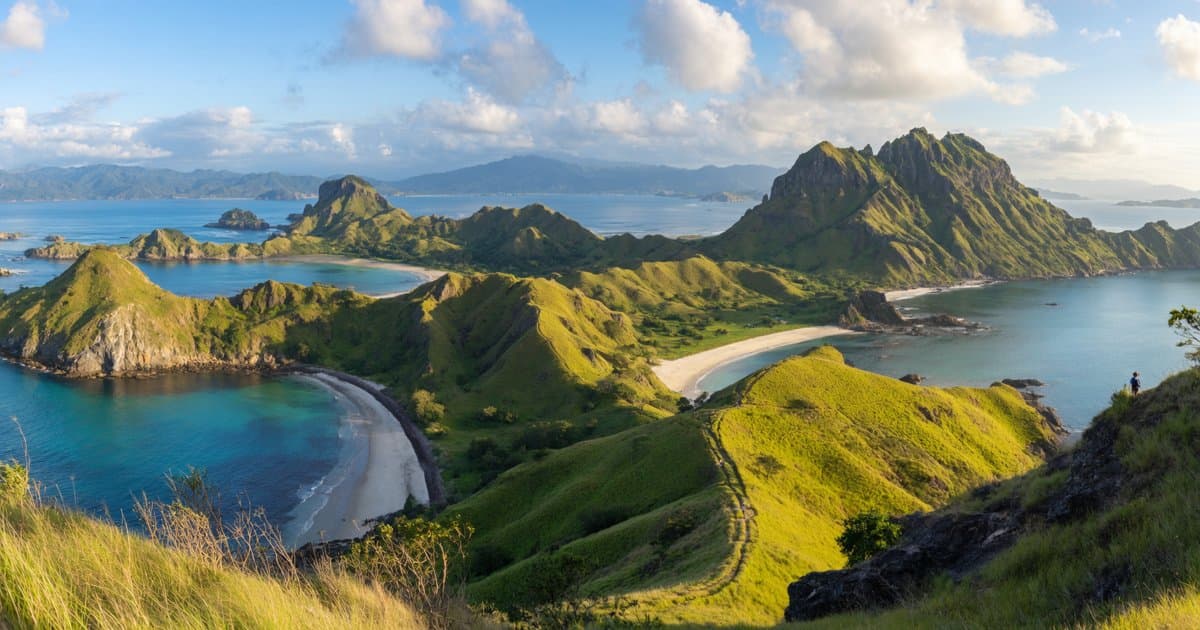
I'll be honest — when I booked flights to Hong Kong, I was thinking dim sum, rooftop bars, and maybe a ferry to Macau. Hiking wasn't even on the radar. Then a mate who'd lived in the city for years told me National Geographic had ranked the MacLehose Trail as one of the top 20 best hikes in the world, and I genuinely thought he was taking the piss. Hong Kong? World-class hiking? The place I associated with neon-lit shopping malls and skyscrapers stacked on top of each other? Turns out, seventy percent of Hong Kong is actually green space. Mountains, coastline, subtropical forest — and cutting through the best of it is the 100-kilometre MacLehose Trail, split into ten sections across the New Territories. Section 2 is the crown jewel. It's coastal, dramatic, and surprisingly accessible — you don't need ropes, permits, or a death wish. You just need decent shoes, a couple of litres of water, and a willingness to have your assumptions about Hong Kong completely dismantled.
Day 1: The East Dam and Volcanic Ghosts
Section 2 begins at High Island Reservoir East Dam (万宜水库东坝), and the trail wastes absolutely zero time making an impression. Within the first twenty minutes, you're standing on the dam wall staring at something that looks like it belongs in Iceland, not subtropical China — towering hexagonal volcanic rock columns, stacked like giant organ pipes, plunging into the sea below. These are the remnants of a supervolcano that erupted roughly 140 million years ago. The formation at Po Pin Chau (破边洲) — a sea stack just offshore — is part of a UNESCO Global Geopark, and the scale of it is genuinely staggering. Each column is perfectly geometric, weathered into honeycombs and grooves by millennia of salt wind. This spot appears on Hong Kong's $500 banknote, and standing there in person, you understand why. It doesn't look real. I spent a good half hour just gawping at it, turning my camera this way and that, trying to capture something that photos simply don't do justice.
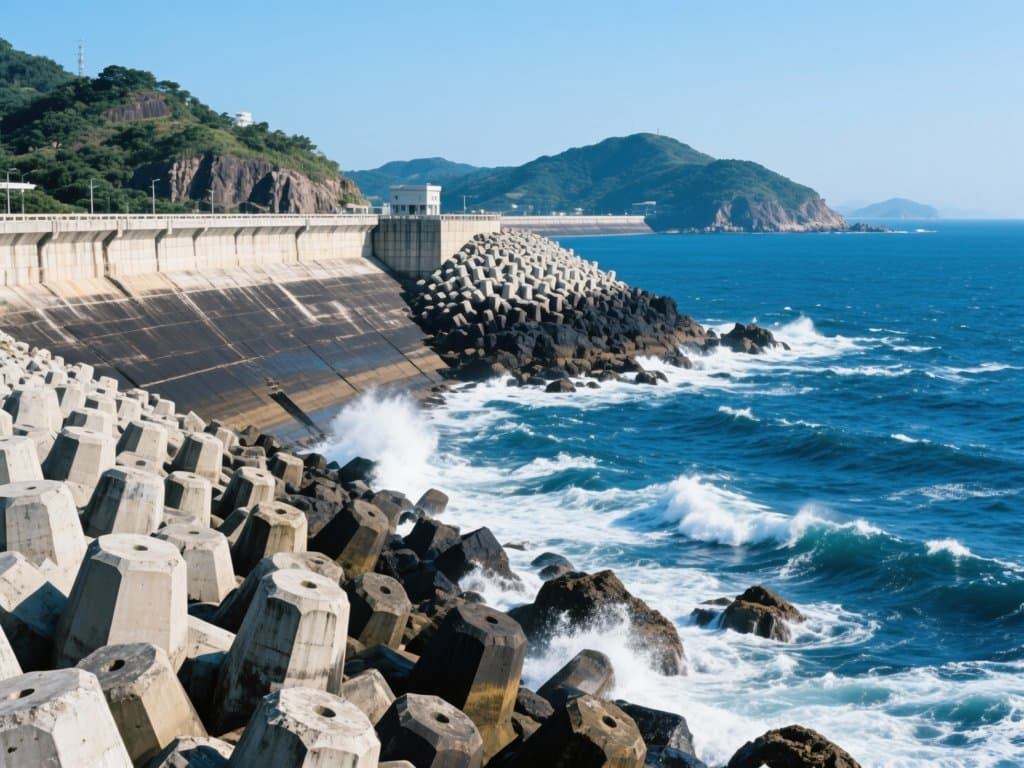
You can't drive to the trailhead — only taxis are allowed past the checkpoint. Budget HK$200-250 for the taxi from Sai Kung. There's no public bus.
Long Ke Wan: The Beach That Changed Everything
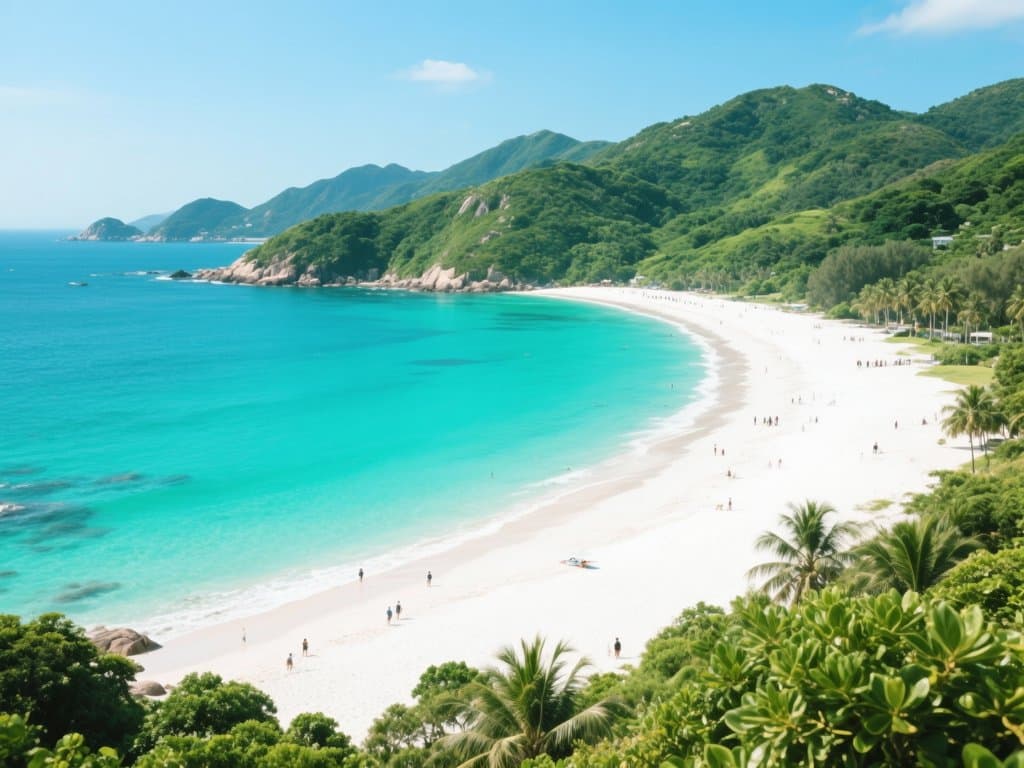
After the dam, the trail dips through scrubby hillside before delivering you to Long Ke Wan (浪茄湾), and I reckon this is the moment the MacLehose Trail properly gets its hooks into you. Long Ke Wan is regularly called Hong Kong's most beautiful beach, and having now seen it with my own eyes, I'm not going to argue. It's a wide crescent of pale sand backed by low green hills, and the water — mate, the water. It was this impossible, luminous turquoise, the kind of colour you see in Maldives brochures and assume has been cranked up in Photoshop. No filter needed here. Not a single one. The beach was almost deserted. A couple of hikers were having lunch under a tree. One bloke was swimming. That was it. The only way to reach Long Ke Wan is on foot, which means no day-tripper crowds, no hawkers, no jet skis — just sand, sea, and silence. I dropped my pack, kicked off my boots, and waded in fully clothed. The water was warm and so clear I could see my toes on the sandy bottom three metres out. I stood there for a while, waist-deep, staring at the hills and thinking this might be the most underrated beach I've ever visited.
Climbing Sai Wan Hill: The Hardest and Best Part
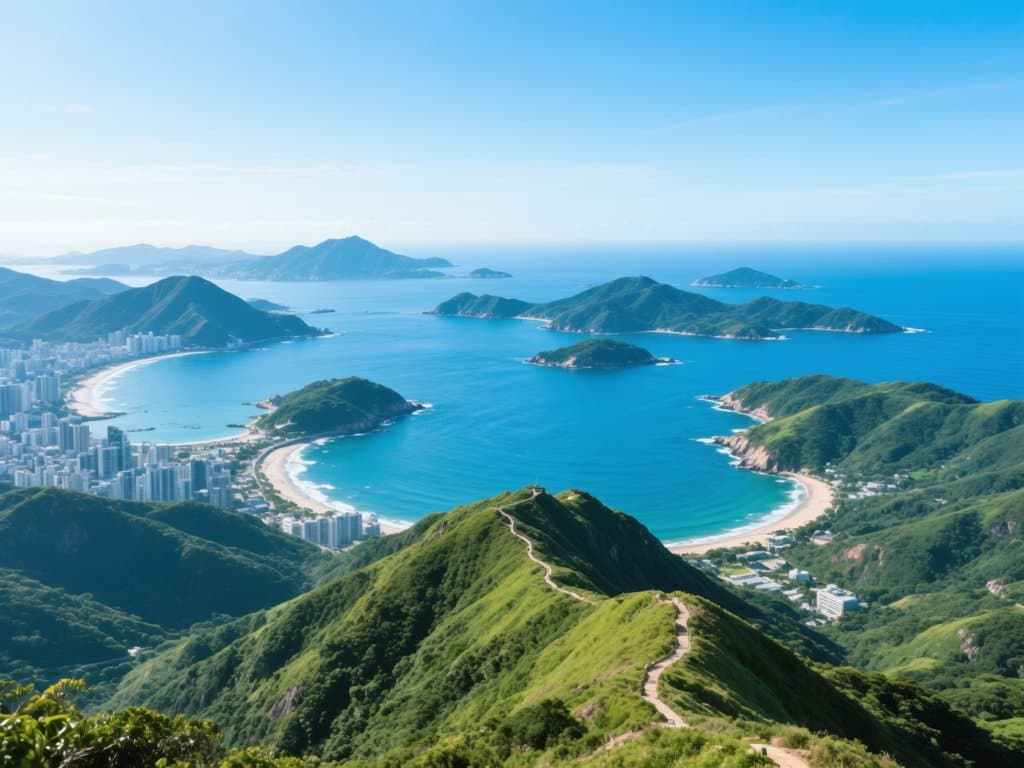
Leaving Long Ke Wan means climbing, and the ascent up Sai Wan Hill (西湾山, 314 metres) is where the trail stops being a pleasant coastal stroll and starts demanding something from you. The path switchbacks steeply through forest at first — dense subtropical canopy, bird calls, the smell of damp earth — and then the trees thin out and you're on an exposed grassy ridge with the sun absolutely belting down on you. My legs were burning. My shirt was soaked through. I was going through water faster than I'd planned. Every false summit had me swearing under my breath. And then — then I hit the actual summit and stopped dead. Three sides of open ocean. Rolling emerald hills dropping sharply into deep, impossibly blue water. Islands scattered across the horizon like someone had tossed them there. The South China Sea stretching to the edge of the world. Wind in my face. Not a building, not a road, not a single sign of the seven-million-person megacity that was technically just over those hills to the south. I sat on a rock and didn't say anything for about ten minutes. I'm not usually one for getting emotional about views, but this one hit different. It was the contrast, I think — the knowledge that one of the densest cities on Earth was right there, and yet here I was, standing on a wild ridge with nothing but ocean and sky and green. This is why people fly across the world for this trail. This single view.
Wild Camping at Sai Wan Village
The descent from Sai Wan Hill drops you into Sai Wan Village (西湾村), a tiny fishing settlement clinging to a bay on the coast. A handful of villagers still live here and run basic food stalls — instant noodles, cold drinks, fried rice if you're lucky. It's not fine dining, but after six hours on the trail, a bowl of hot noodles and a freezing Tsingtao tasted like a Michelin meal. We pitched our tent about thirty metres from the water's edge, on a flat grassy area behind the beach. The sun was dropping towards the hills behind us, painting the bay in golds and pinks. A couple of other hikers had set up nearby, but it was quiet — the kind of quiet that city people forget exists. No traffic, no construction, no notification pings. Just waves on sand, the occasional bird, and the creak of tent poles in the breeze. I fell asleep to the sound of the ocean and woke at 5:30am to watch the sunrise spill across the South China Sea. The sky went from deep purple to rose to blazing orange in about fifteen minutes. There was no phone signal. No Wi-Fi. No one trying to sell me anything. Just the water, the light, and a silence so deep it felt physical. And overhead, stars — proper stars, the kind you never see in a city, thick and bright and scattered carelessly across the whole sky. I lay there in the dark before dawn, staring up through the mesh of the tent, and thought: this is exactly where I'm supposed to be.
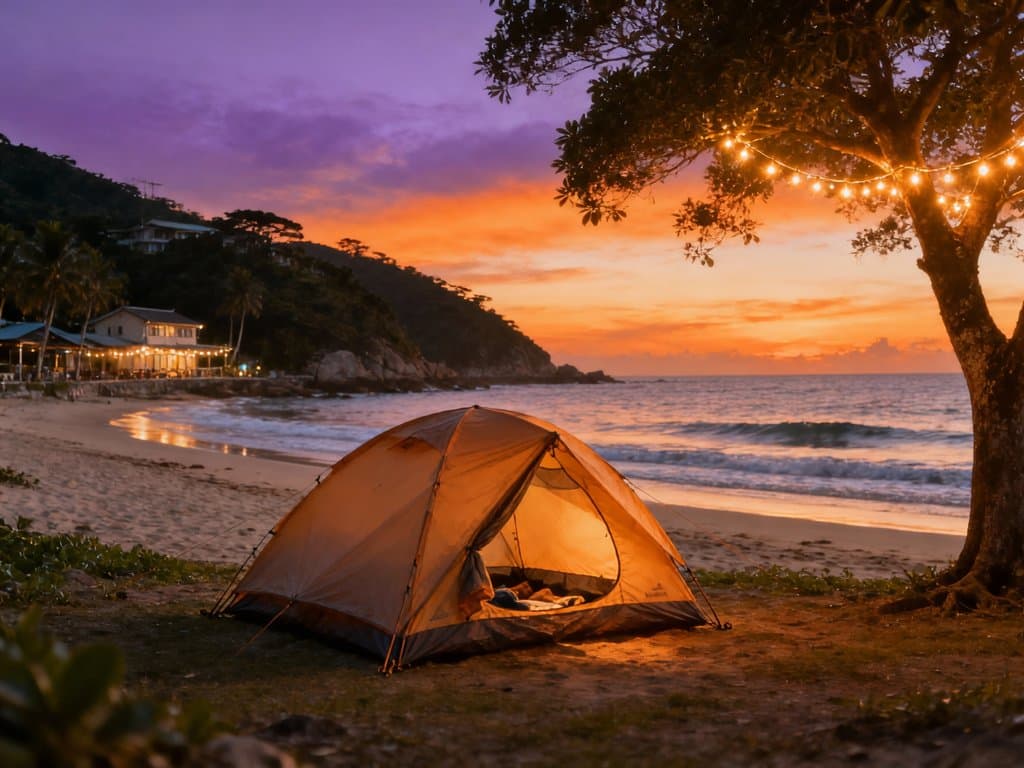
There are no hotels on Section 2 — only camping. You can rent basic tents at Sai Wan Village (around HK$200/person) or bring your own. Pack a sleeping bag liner at minimum.
Day 2: Forest Trails and the Finish Line
Day 2 was a different beast — gentler, greener, more meditative. The trail from Sai Wan Village pushes through dense subtropical forest, the canopy closing overhead and dappling the path with shifting patterns of light. Small creeks trickled across the track. Birdsong filled the gaps between footsteps. After the exposed drama of the ridge the day before, this felt like walking through a living cathedral. Eventually the trees opened up and delivered one last sucker punch of scenery: a panoramic view down to Ham Tin Wan (咸田湾), another crescent of white sand lapped by clear water, backed by the jagged green spine of Sharp Peak. Some hikers add a Sharp Peak detour — it's a serious scramble and not part of the official MacLehose route, but the views from the top are apparently unreal. The trail finally ends at Pak Tam Au (北潭凹), where a minibus waits to take you back to Sai Kung. I sat on the bus with salt-crusted skin, aching quads, and that bittersweet feeling you get when something brilliant is over. Total distance: roughly 19 kilometres over two days, with about 650 metres of cumulative elevation gain. My legs knew about every single metre of it.
Bonus: Angel's Road on Sharp Island
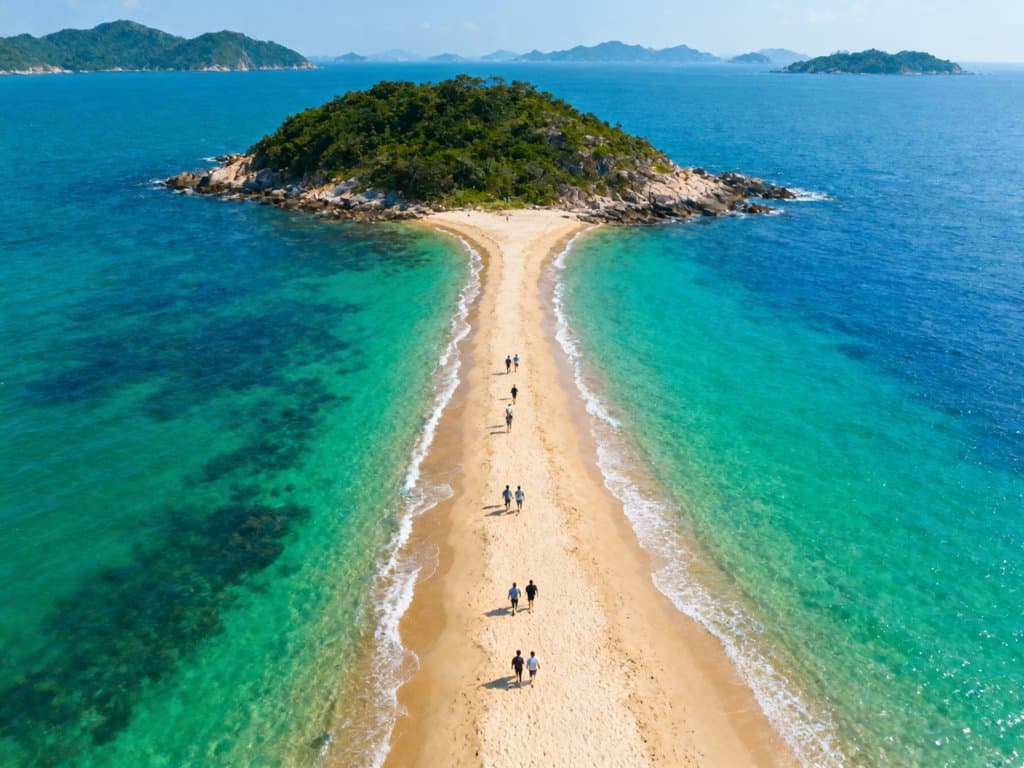
After finishing the MacLehose Trail, we had a bonus day in Sai Kung and took the short ferry out to Sharp Island (桥咀洲). This is one of those places that sounds too whimsical to be real — at low tide, a sandy tidal path emerges from the water connecting the main island to a smaller islet called Kiu Tau. They call it "Angel's Road" (天使之路), and walking across it with the ocean on both sides, ankle-deep in warm water, seashells crunching underfoot — it felt like something out of a Studio Ghibli film. The island itself is part of the UNESCO Geopark and has some wonderfully weird weathered volcanic rocks that locals have nicknamed "pineapple rocks" because of their bumpy, textured surface. The whole circuit takes about an hour, and the ferry from Sai Kung Public Pier runs regularly for HK$30 return. Check the tide tables before you go — Angel's Road only appears at low tide, and if you time it wrong, you're just looking at open water where the path should be.
Sai Kung: Hong Kong's Chill Back Garden
Sai Kung (西贡) is the gateway town for the MacLehose Trail and, honestly, it deserves a couple of days in its own right. The waterfront is lined with seafood restaurants where you pick your fish from tanks out the front and they cook it however you like — steamed with ginger and shallot is the classic Cantonese move. The typhoon shelter crab is an absolute must: wok-fried in garlic, chilli, and crispy shallots, messy to eat and completely addictive. Beyond the seafood, there are chill cafes with decent flat whites, quirky independent shops, and a relaxed vibe that mixes expat families with local fishing village character. Grab a cold beer at one of the harbourfront bars and watch the fishing boats bob in the late afternoon light. This is the side of Hong Kong that tourists completely miss — no skyscrapers, no luxury malls, just a small coastal town that happens to sit on the doorstep of some of the best nature in East Asia.
Practical Info: What You Need to Know
Section 2 stats: 13.5 kilometres, roughly 7 hours of walking, rated moderate to difficult. The terrain is mostly dirt paths and stone steps with some steep ascents and descents. Here's the essential planning info: - Water: bring 2–3 litres. There are no reliable refill points on the trail and the ridge sections are fully exposed to the sun. - Footwear: proper hiking shoes with ankle support. Do not wear trainers or sandals — the rocky descents will punish you. - Start time: before 9am to avoid the worst of the afternoon heat. - Best months: October to March, when it's cooler and drier. Summer is doable but brutal — think 35°C with tropical humidity. - Maps: download offline maps before you go. Cell service is patchy to non-existent on large stretches of the trail. - Sun protection: this is critical. The ridge sections have almost no shade and the subtropical sun is fierce. Hat, sunscreen, long sleeves if you burn easily. - Getting back: minibus 29R runs from Pak Tam Au back to Sai Kung town centre. Frequency varies — on weekends there are more services. This is not a casual stroll, but you don't need to be an elite athlete either. Reasonable fitness, proper preparation, and an early start will see you through — and what you get in return is one of the most spectacular coastal hiking experiences in Asia.
Find hotels in Hong Kong — Sai Kung and Kowloon are the best bases for MacLehose Trail hiking
Prices compared via Trip.com. We may earn a commission at no extra cost to you.
Compare HotelsBook Hong Kong hiking tours and outdoor activities
Prices compared via ChinaCheapo. We may earn a commission at no extra cost to you.
Browse Activities