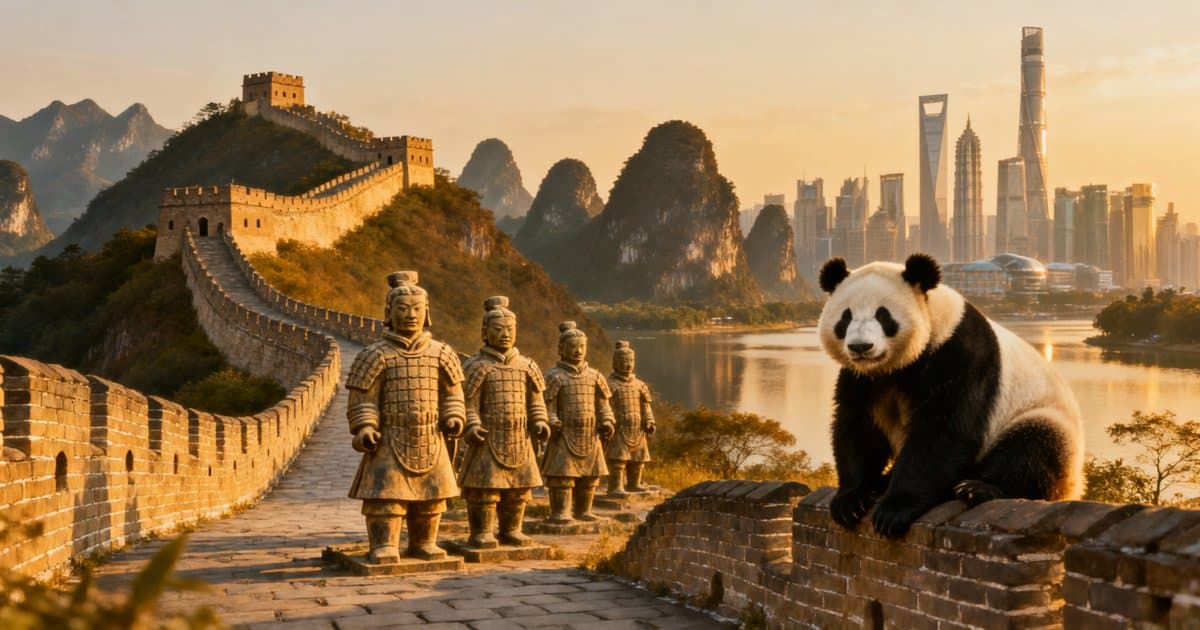
First Time in China: The Ultimate 14-Day Route
Trip Overview
Best For
Highlights
- Stand on the Great Wall and walk through the Forbidden City in Beijing
- Face 8,000 Terracotta Warriors in Xi'an — one of archaeology's greatest finds
- Meet giant pandas at Chengdu's breeding research base
- Cruise the Li River through Guilin's otherworldly karst landscape
- Watch Shanghai's futuristic skyline light up from the Bund
Total Estimated Budget
¥12,000–20,000 (~$1,680–2,800)
Covers accommodation, transport, food & activities for 14 days
Day-by-Day Itinerary
Follow this 14 days plan from start to finish, with real costs and local tips.
Day 1
Arrive in Beijing
Fly into Beijing, settle near the Drum Tower, and ease into China with a hutong walk and Peking duck.
Take the Airport Express or Daxing metro line into the city. Buy a Yikatong transit card at any station for seamless bus and subway travel.
The Gulou area is central, atmospheric, and packed with hutong lanes. Budget to mid-range hotels run ¥150–400/night.
Wander the lanes around Houhai Lake. Grab jianbing (savoury crepes) and chuanr (lamb skewers) from street vendors.
Siji Minfu near Qianmen serves excellent Peking duck at a fraction of Quanjude's price. Half a duck plus sides is plenty for one.
Day 2
Forbidden City & Temple of Heaven
Beijing's two greatest imperial landmarks — the world's largest palace and a 600-year-old temple park.
Enter from the south (Meridian Gate), work north. The audio guide (¥40) is worthwhile. Allow 3–4 hours for the key halls and Imperial Garden.
Tip: Pre-book on the Palace Museum WeChat mini-program at least 3 days ahead — daily tickets sell out.
Climb the hill behind the Forbidden City for a panoramic overhead view. Grab noodles at the park's north exit.
Metro Line 5 south. The Hall of Prayer for Good Harvests is one of China's most iconic buildings. The surrounding park teems with retirees dancing, singing, and flying kites.
Browse restored Qing-dynasty shopfronts. Try Duyichu shaomai and tanghulu (candied hawthorn on sticks).
Day 3
Great Wall at Mutianyu
Full-day trip to the Mutianyu section — restored, scenic, and far less crowded than Badaling.
Bus 916 Express from Dongzhimen (¥12, 60 min) then H23/H36 minibus (¥4). Or book a shared transfer (¥100–150 round trip).
Cable car up, hike east from Tower 6 toward Tower 20 where the wall turns wild and photogenic. Toboggan down. Bring water — no vendors on the wall.
Hearty northern food — hongshao rou, hand-pulled noodles, cold beer. Village restaurants are reasonably priced.
Same bus route back. Casual dinner near your hotel and early night.
Day 4
Summer Palace, 798 Art District & Prep for Xi'an
Imperial gardens in the morning, contemporary art in the afternoon, then pack for tomorrow's train.
Enter from north gate (Beigongmen, Line 4). Walk the Long Corridor, climb Longevity Hill, dragon-boat across Kunming Lake.
Quick noodles or dumplings outside the east gate.
Converted military factory, now Beijing's creative hub. Most galleries free. UCCA Center is the standout (¥80 for exhibitions).
Last evening in Beijing. Consider the Drum and Bell Towers at dusk, then pack for tomorrow's early train to Xi'an.
Day 5
Beijing → Xi'an: City Wall & Muslim Quarter
Morning bullet train to Xi'an, afternoon cycling the ancient city wall, evening feasting in the Muslim Quarter.
G-trains take 4.5–5 hours. Second-class seats are spacious with legroom and a fold-down tray. Book 2–3 days ahead on 12306 or Trip.com.
Walking distance to city wall, Muslim Quarter, and metro. Hotels ¥200–400/night — cheaper than Beijing.
Rent a bike atop the 14 km wall (¥45/2 hrs) and ride the full loop. The wall is 12 m wide — more boulevard than ledge. Sunset light is best.
Tip: Start at South Gate (Yongning Gate), ride clockwise for the best late-afternoon light.
Xi'an's Hui Muslim neighbourhood is one of China's greatest food streets. Must-tries: yangrou paomo (lamb soup with torn bread), roujiamo (Chinese "hamburger"), and biangbiang noodles.
Tip: Walk past the crowded first block of Beiyuanmen — better stalls are deeper inside.
Day 6
Terracotta Warriors & Big Wild Goose Pagoda
Morning at one of the world's greatest archaeological sites, afternoon at Xi'an's iconic Tang dynasty pagoda.
Tourist bus 5 (306) from Xi'an Railway Station east square (¥7, 60 min). Three excavation pits — Pit 1 has 6,000+ warriors in formation. Allow 2–3 hours.
Tip: Hire an English-speaking guide at the entrance (¥150 for a group) — the history comes alive with context.
The museum cafeteria has fair prices. Or wait until you're back in the city for a better meal.
A 7-storey pagoda built in 652 AD to house Buddhist scriptures. The surrounding square has a musical fountain show at fixed times.
De Fa Chang near the Bell Tower serves an 18-course dumpling feast — every regional style represented. Touristy but fun.
Day 7
Xi'an → Chengdu: Into Sichuan
Bullet train through the mountains to Chengdu, settling in with hotpot and a stroll along Jinli Street.
G-train takes 3.5 hours through dramatic mountain scenery. This route slashed travel time from 16 hours when it opened in 2017.
Chengdu's main shopping district. Hotels ¥150–350/night — excellent value. Taikoo Li mall is great for people-watching.
Wuhou Shrine honours the heroes of the Three Kingdoms. Jinli Street next door has snacks, tea, and Sichuan opera face-changing performances.
Chengdu is the birthplace of mala (numbing-spicy) hotpot. Xiaolongkan or Shu Daxia are reliable chains. Order the half-and-half pot if you can't take full spice.
Tip: Request a manduo (mild) broth alongside the mala — your stomach will thank you on Day 1 of Sichuan food.
Day 8
Giant Pandas & Sichuan Cuisine
Morning with the pandas at the research base, afternoon learning to cook Sichuan dishes, evening at a tea house.
Arrive at opening to see the pandas at their most active (they nap by 10:00). The base houses 200+ giant pandas and red pandas in a semi-natural habitat. Take metro Line 3 to Panda Avenue station, then shuttle bus.
Tip: Go on a weekday if possible. Weekends are packed. The baby panda enclosure is the highlight — check the nursery schedule at the entrance.
Several outfits run half-day classes for foreigners (Sichuan Cuisine Museum or private operators). You'll visit a wet market, buy ingredients, and cook mapo tofu, kung pao chicken, and dan dan noodles.
Join the locals for an afternoon of tea at Heming Tea House in People's Park. A pot of jasmine tea costs ¥15–30 and you can sit for hours. Ear cleaners and mahjong players add to the atmosphere.
Yulin is Chengdu's best local food street — no tourists, all locals. Try cold rabbit head (a Chengdu speciality), maocai (DIY hotpot), or zhong shui jiao (chili wontons).
Day 9
Leshan Giant Buddha or Wide & Narrow Alleys
Choose between a day trip to the world's largest stone Buddha or a relaxed morning in Chengdu's historic lanes.
High-speed train to Leshan (¥54, 45 min) or intercity bus (¥45, 2 hrs). The 71 m Buddha, carved into a cliff face in 713 AD, is staggering in scale. The river-view boat (¥70) gives the best perspective; the walk-down staircase alongside the statue is the most dramatic.
Tip: If you walk the cliff-side stairs, expect a 2-hour queue on weekends. Weekdays are far better.
If you prefer a relaxed morning, explore these three restored Qing-dynasty lanes. More polished than Jinli but with better cafés and galleries. Have brunch at a courtyard restaurant.
A serene park honouring China's greatest Tang dynasty poet, who lived here in the 8th century. Beautifully maintained gardens with calligraphy exhibitions.
Catch a bianlian (face-changing) performance at Shufeng Yayun or the Jinjiang Theatre. Performers swap elaborately painted masks in the blink of an eye — it's mesmerising.
Day 10
Chengdu → Guilin: Karst Country
Fly to Guilin and spend the afternoon exploring the city's limestone hills and cave systems.
Direct flights take about 1.5 hours. Budget airlines like Spring Airlines or West Air often have fares under ¥400 if booked 2 weeks ahead. Guilin Liangjiang Airport is 30 km from the city.
Tip: No direct high-speed train exists yet. Flying is the fastest and often cheapest option.
Central Guilin is compact and walkable. Hotels near Zhengyang Road or the Li River waterfront are convenient. Budget options from ¥100/night.
A 240 m limestone cave lit with colourful lights, featuring stalactites, stalagmites, and rock formations with fanciful names. It's impressive regardless of the sometimes cheesy lighting.
Guilin's icon — a hill shaped like an elephant drinking from the Li River. The ¥75 entry fee is steep for what it is; many travellers just photograph it from across the river for free.
Day 11
Li River Cruise to Yangshuo
Cruise the Li River through China's most photographed landscape, then explore Yangshuo's countryside.
The 83 km cruise takes 4–5 hours through a dreamscape of karst peaks, bamboo groves, and water-buffalo-dotted riverbanks. The scene on the ¥20 banknote is along this route. Standard boats include a basic lunch.
Tip: Book the 3-star boat (¥210) — it's the same river. The more expensive 4-star boats just have marginally better food. Sit on the upper deck.
Yangshuo's West Street is backpacker-central and heavily touristed, but the surrounding countryside is spectacular. Walk West Street for the vibe, then escape to the outskirts.
Rent a bike (¥30–50/day) or e-bike (¥80) and ride the Yulong River route. The karst scenery is jaw-dropping — limestone peaks rising from emerald rice paddies. Cross ancient stone bridges and pass through tiny farming villages.
Beer fish (pijiu yu) is Yangshuo's signature dish — Li River fish cooked in beer, tomatoes, and chili. Nearly every restaurant serves it. Pair with a cold Guilin Liquan beer.
Day 12
Guilin → Shanghai: The Bund & French Concession
Fly or train to Shanghai, check in to the French Concession, and catch your first Bund sunset.
Direct flights take 2.5 hours. Alternatively, the G-train via Changsha takes 7–8 hours but the scenery is gorgeous. Flights are better if you value time.
Tip: Fly into Hongqiao (SHA) rather than Pudong (PVG) — it's much closer to the city centre.
Tree-lined streets, art deco architecture, and Shanghai's best café scene. Good 3-star hotels ¥300–500/night near Hengshan Rd or South Shaanxi Rd metro.
Wander Wukang Road, Anfu Road, and Yongkang Road. Pop into independent cafés and boutiques. This is Shanghai at its most walkable and atmospheric.
The 1.5 km riverside promenade with Pudong's skyline blazing across the Huangpu. Walk south past the crowds for a less packed vantage point.
Day 13
Yu Garden, Pudong & River Cruise
Old Shanghai in the morning, futuristic Pudong towers in the afternoon, and a Huangpu River cruise at night.
Ming dynasty garden surrounded by a bustling bazaar. Arrive at 8:30 to beat the crowds. Eat xiaolongbao at Nanxiang Steamed Bun Restaurant (upstairs for sit-down, skip the ground-floor queue).
China's most famous shopping street. Walk from the Bund to People's Square. Duck into side streets for better food and prices.
China's tallest building at 632 m. The 118th-floor deck offers vertigo-inducing views across Pudong and beyond.
Tip: Check AQI before going — skip it if air quality is above 150.
A 1-hour cruise showing the Bund's colonial grandeur on one side and Pudong's sci-fi skyline on the other. Basic boats from ¥80.
Day 14
Zhujiajiao Water Town & Farewell
Morning trip to a 1,700-year-old water town, then back to Shanghai for last-minute exploration and departure.
Huzhu Express bus from Pu'an Road (¥12, 60 min). Arched stone bridges, gondola rides, and zongzi vendors along the canals. The most accessible water town from Shanghai.
Tip: Skip the all-inclusive ticket and just buy entry to 2–3 sights. Walking the canals is free.
Local zha rou (braised pork in rice wine) and freshwater shrimp at any canal-side spot. Portions are generous.
Back in Shanghai — browse Tianzifang's shikumen lanes for unique souvenirs, or hit Nanjing Road for last purchases. Final xiaolongbao at Jia Jia Tang Bao on Huanghe Road.
Allow 90 minutes for Hongqiao (SHA) or 2 hours for Pudong (PVG). The Maglev from Longyang Rd to PVG takes 8 minutes (¥50) and is an attraction in itself — it hits 430 km/h.
Packing Tips
Pack layers — this route spans northern and subtropical climates. Beijing can be 15°C cooler than Guilin.
Bring a universal power adapter; China uses Type A/C/I outlets. Most hotels have USB ports.
Carry toilet paper and hand sanitiser — many public restrooms outside major cities are basic.
Download Alipay and WeChat before arrival and link an international card. Cash is increasingly difficult to use in Chinese cities.
Book This Trip
Ready to go? Use our partner links below to book flights, hotels, trains, and activities for beijing.
Want this itinerary customized for your dates and budget?
Get a Custom PlanMore Itineraries
 budget
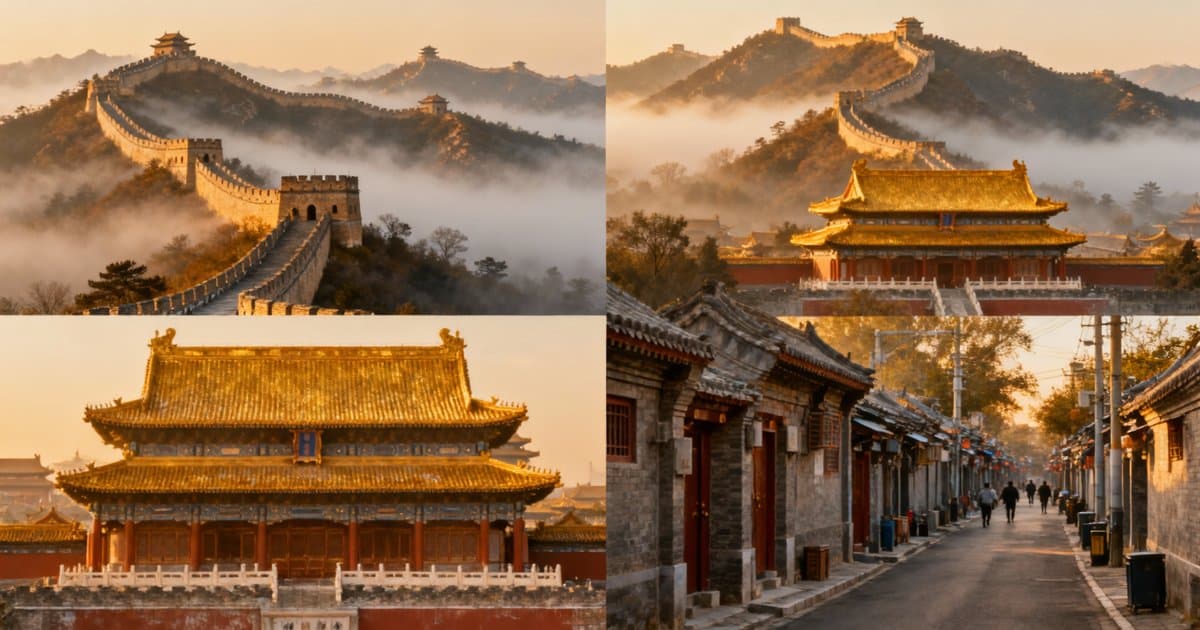
Beijing in 5 Days: Imperial History to Modern Hutongs
Cover Beijing's greatest hits on a budget — from the Great Wall to hidden hutong eateries. Five packed days with real costs and local tips.
 mid-range
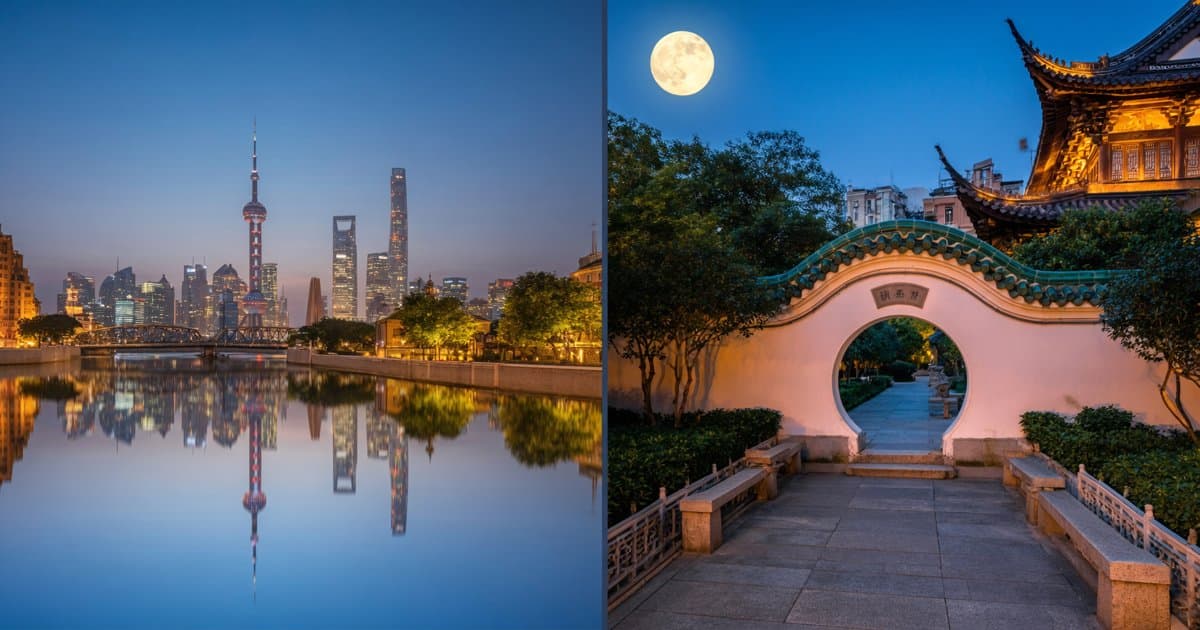
Shanghai, Suzhou & Hangzhou: 7-Day East China Loop
Three of China's most beautiful cities linked by high-speed rail. Neon skylines, classical gardens, and West Lake — all in one week.
 budget
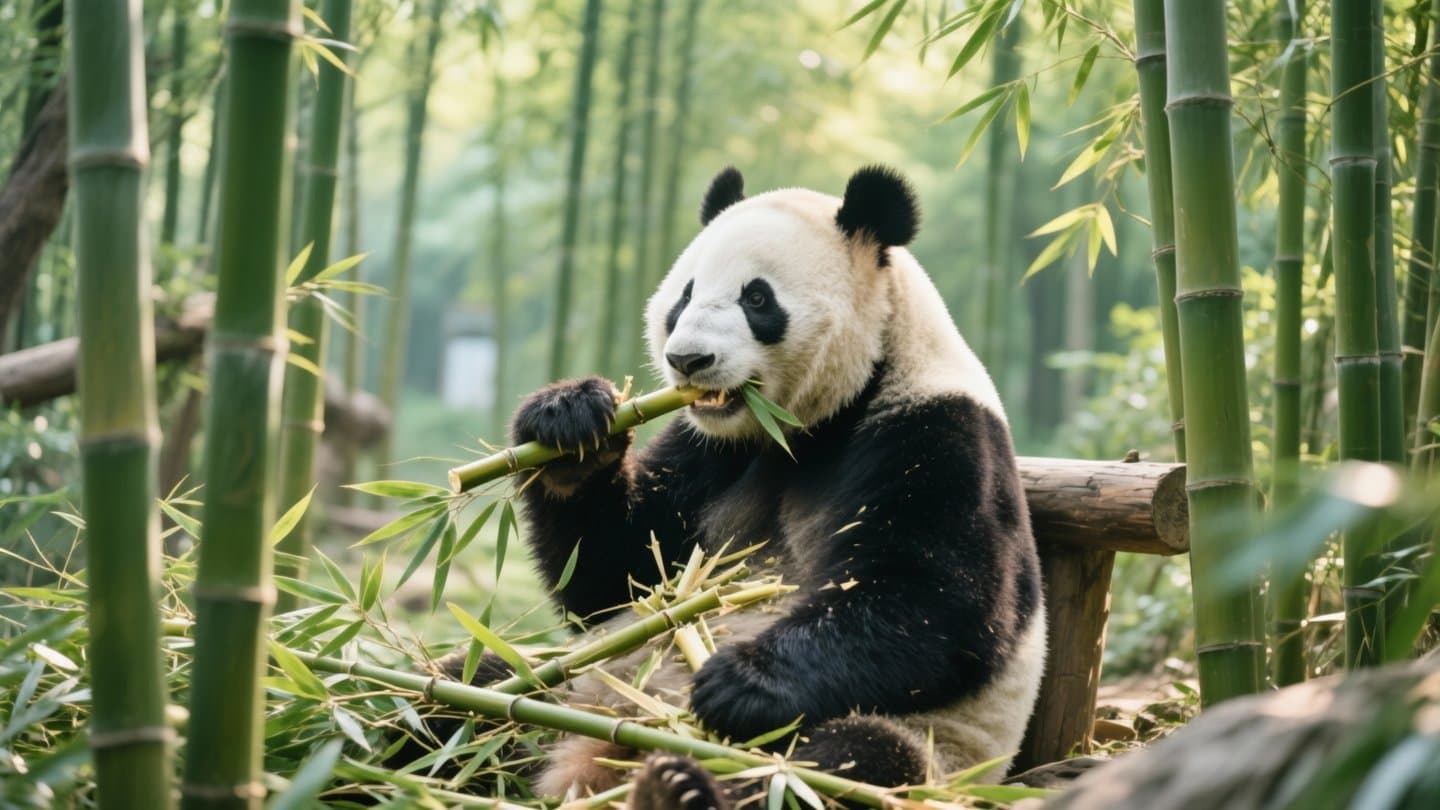
Chengdu & Sichuan in 5 Days: Pandas, Hotpot & Sacred Mountains
Five days exploring Sichuan — giant pandas at dawn, Leshan Giant Buddha, Mount Emei, and more hotpot than your stomach can handle.