Shanghai, Suzhou & Hangzhou: 7-Day East China Loop
Trip Overview
Best For
Highlights
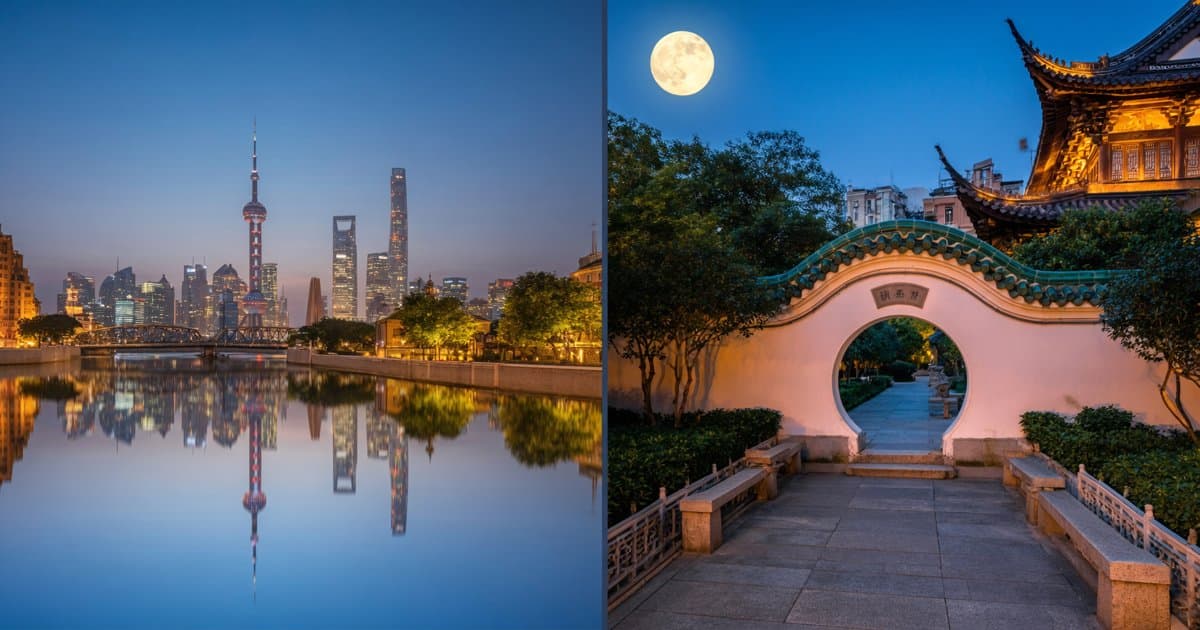
- Watch sunrise over the Bund with Pudong's skyline glowing across the river
- Stroll Suzhou's UNESCO-listed classical gardens, perfected over 1,000 years
- Cruise West Lake in Hangzhou at sunset
- Ride the 350 km/h bullet train between all three cities
- Sample xiaolongbao, dongpo pork, and Longjing shrimp — the best of Jiangnan cuisine
Total Estimated Budget
¥5,500–8,500 (~$770–1,190)
Covers accommodation, transport, food & activities for 7 days
Day-by-Day Itinerary
Follow this 7 days plan from start to finish, with real costs and local tips.
Day 1
Arrive in Shanghai & The Bund
Land at Pudong or Hongqiao, settle into the French Concession, and hit the Bund for your first skyline moment.
From PVG, take Metro Line 2 (¥7, ~70 min to city centre) or the Maglev to Longyang Rd then transfer (¥50 Maglev + ¥4 metro). From Hongqiao, Line 2 or 10 gets you downtown in 30 minutes.
The former French Concession (near Hengshan Rd or South Shaanxi Rd metro) is Shanghai's most walkable neighbourhood — tree-lined lanes, boutique cafés, and art deco architecture. Good 3-star hotels run ¥300–500.
Wander Wukang Road, Anfu Road, and Yongkang Road. Pop into a local coffee shop — Shanghai has one of the world's densest café scenes. This is low-key exploration to shake off jet lag.
Walk the 1.5 km riverside promenade as Pudong's skyscrapers light up across the Huangpu River. This is Shanghai's signature view and it's completely free.
Tip: Walk south past the tourist crowds toward the Cool Docks area for a less packed vantage point.
Day 2
Old Shanghai & Pudong Heights
Dive into Shanghai's layers — century-old Yu Garden in the morning, futuristic Pudong towers in the afternoon.
This 400-year-old Ming dynasty garden is a beautiful pocket of classical China amid the urban chaos. The surrounding Yuyuan Bazaar is touristy but great for xiaolongbao at Nanxiang Steamed Bun Restaurant (the original, upstairs — skip the ground-floor queue).
Tip: Arrive when it opens at 8:30 — by 10:00 it's shoulder-to-shoulder with tour groups.
Walk west along Nanjing Road from the Bund to People's Square. It's China's most famous shopping street — overwhelming but worth a stroll. Duck into side streets for better food and prices.
At 632 m, Shanghai Tower is China's tallest building. The 118th-floor observation deck offers vertigo-inducing views over Pudong and beyond. On a clear day you can see for 40+ km.
Tip: Check air quality index before going — if AQI is above 150, you'll see nothing but grey. Save it for a clear day.
A 1-hour evening cruise along the Huangpu shows off both the Bund's colonial architecture and Pudong's sci-fi skyline. Basic boats start at ¥80; VIP decks run ¥150.
Day 3
Shanghai: Zhujiajiao Water Town & Tianzifang
Day trip to a 1,700-year-old water town in the morning, then browse independent art in Tianzifang by evening.
Take the Huzhu Express bus from Pu'an Road (¥12, ~60 min). This is the most accessible ancient water town from Shanghai — arched stone bridges, gondola rides, and zongzi (sticky rice wrapped in leaves) vendors lining the canals.
Tip: Skip the expensive "all-inclusive" ticket and just buy entry to the 2–3 sights that interest you. Walking the canals is free.
Try the local speciality zha rou (braised pork in rice wine) and freshwater shrimp at any canal-side restaurant. Portions are generous and cheap.
Back in Shanghai, explore Tianzifang's maze of shikumen (stone-gate) lanes repurposed as galleries, studios, and cafés. It's compact — allow 1.5 hours. Good for unique souvenirs.
Yunnan South Road near Tianzifang is lined with affordable restaurants serving cuisines from across China. Try Yunnan rice noodles or Xinjiang lamb skewers.
Day 4
Shanghai → Suzhou: Classical Gardens
Bullet train to Suzhou in 25 minutes, then spend the day in two of China's most celebrated classical gardens.
Trains depart every 10–15 minutes from Shanghai Hongqiao or Shanghai Station. The G-train takes 25 minutes; D-trains take 30–40 minutes. Second-class seats are perfectly comfortable.
Tip: Book on Trip.com or 12306.cn 1–2 days ahead. You can also just show up and buy at the station — there are many departures.
The largest and most famous of Suzhou's nine UNESCO-listed gardens. Rock formations, lotus ponds, winding corridors — a masterclass in Chinese landscape design. Allow 2 hours.
Suzhou's main pedestrian street has branches of famous local restaurants. Try songshugui yu (squirrel-shaped mandarin fish) — Suzhou's signature dish — at Songhelou, operating since 1757.
Much smaller and more intimate than the Humble Administrator's. Evening performances of kunqu opera are held here in summer (March–November, ¥100). Even without the show, it's exquisite.
Day 5
Suzhou: Canals & Silk, then → Hangzhou
Morning on Suzhou's canals and silk museum, afternoon bullet train to Hangzhou for a West Lake sunset.
This 800-year-old canal-side street is Suzhou at its most photogenic. Wander past tea houses, silk shops, and pingtan (Suzhou ballad) performers. Morning light is best for photos.
Free and fascinating — it covers 5,000 years of silk production. You can watch silk being reeled from cocoons in real-time demonstrations. The gift shop sells genuine silk scarves at factory prices.
Tip: If you want to buy silk, this museum shop or a designated factory outlet is far more reliable than street vendors.
Grab a quick noodle lunch near the station. Suzhou's tangmian (soup noodles) are a regional speciality — light, clean, and delicate.
Direct G-trains take about 1.5 hours. The route passes through the flat, green Yangtze Delta — watch the landscape shift from urban sprawl to rice paddies.
Check in to your Hangzhou hotel, then walk to West Lake. The Su Causeway and Broken Bridge are the classic vantage points. West Lake is free to enter and stunning at golden hour.
Day 6
Hangzhou: West Lake & Longjing Tea
Circle West Lake by bike, hike to Longjing tea village, and feast on Hangzhou's famous dongpo pork.
Rent a public bike (first hour free with Alipay) and ride the 10 km loop around West Lake. Stop at Leifeng Pagoda (¥40) for elevated lake views and the Yue Fei Temple (¥25) for Song dynasty history.
Take bus K27 to Longjing village. Walk through terraced tea fields, visit the China National Tea Museum (free), and taste Longjing (Dragon Well) tea at its source. Buying directly from farmers is the best deal.
Tip: Avoid "tea ceremony" invitations from strangers near West Lake — it's a common scam targeting tourists. Go to the village directly.
This lakeside restaurant has served Hangzhou cuisine since 1848. Order dongpo rou (braised pork belly), West Lake fish in vinegar sauce, and Longjing shrimp. Touristy but the food is genuinely good.
This restored Qing-dynasty pedestrian street has traditional pharmacies, tea shops, and street food. Visit Huqingyu Tang — a 140-year-old Chinese medicine hall with a small museum.
Day 7
Lingyin Temple & Return to Shanghai
Visit one of China's oldest Buddhist temples, then take the bullet train back to Shanghai for departure.
One of China's largest and most important Buddhist temples, founded in 328 AD. The surrounding forest is dotted with hundreds of rock-carved Buddhist statues from the 10th–14th centuries. A genuinely special place.
The vegetarian restaurant inside the temple complex serves excellent Buddhist cuisine — tofu, mushrooms, and seasonal vegetables prepared with surprising finesse.
G-trains from Hangzhou East take 45–60 minutes to Shanghai Hongqiao. From there, connect to metro or the airport. If flying out, Hongqiao station is literally attached to Hongqiao Airport T2.
Tip: If your flight is from Pudong Airport (PVG), add an extra 1.5 hours for the cross-city metro transfer.
If your flight is later, use the time for last-minute shopping at Nanjing Road or a final xiaolongbao session at Jia Jia Tang Bao (Huanghe Road) — the best in the city.
Packing Tips
Pack a small umbrella or rain jacket — the Yangtze Delta gets drizzly year-round, especially March–June.
Bring a reusable water bottle; free hot water dispensers are everywhere in China (train stations, hotels, malls).
Comfortable walking shoes are essential — Suzhou's gardens and Hangzhou's lakeside paths involve a lot of ground.
Download offline maps for all three cities before departure; Google Maps doesn't work well in China. Use Amap (Gaode) or Baidu Maps.
Book This Trip
Ready to go? Use our partner links below to book flights, hotels, trains, and activities for shanghai.
Want this itinerary customized for your dates and budget?
Get a Custom PlanMore Itineraries
 budget
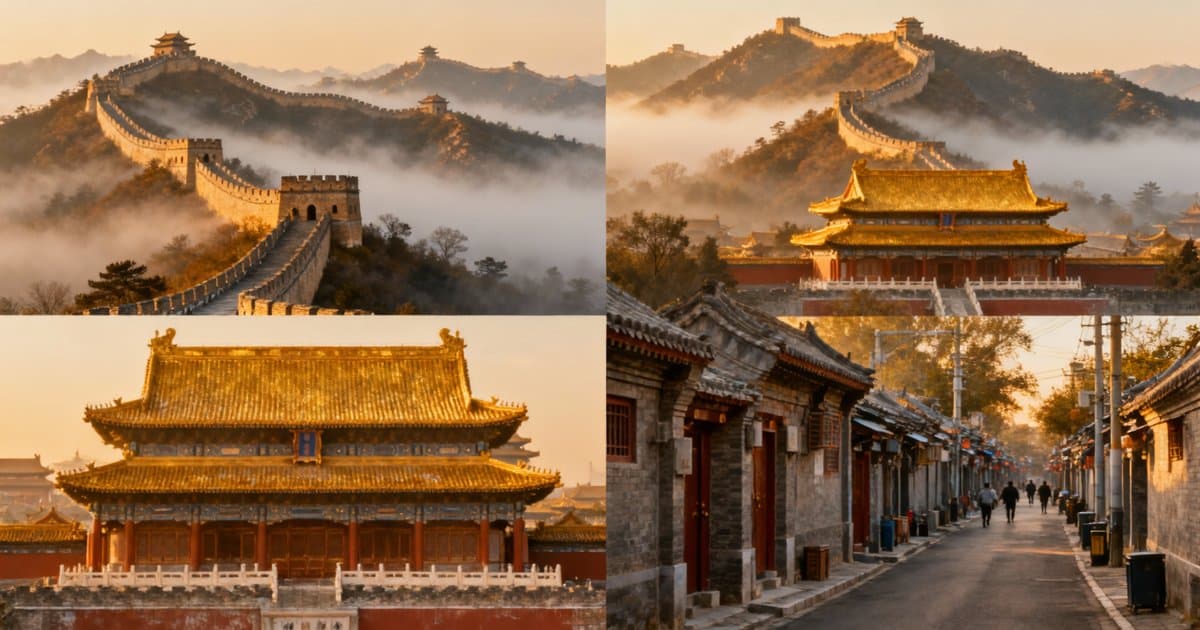
Beijing in 5 Days: Imperial History to Modern Hutongs
Cover Beijing's greatest hits on a budget — from the Great Wall to hidden hutong eateries. Five packed days with real costs and local tips.
 mixed
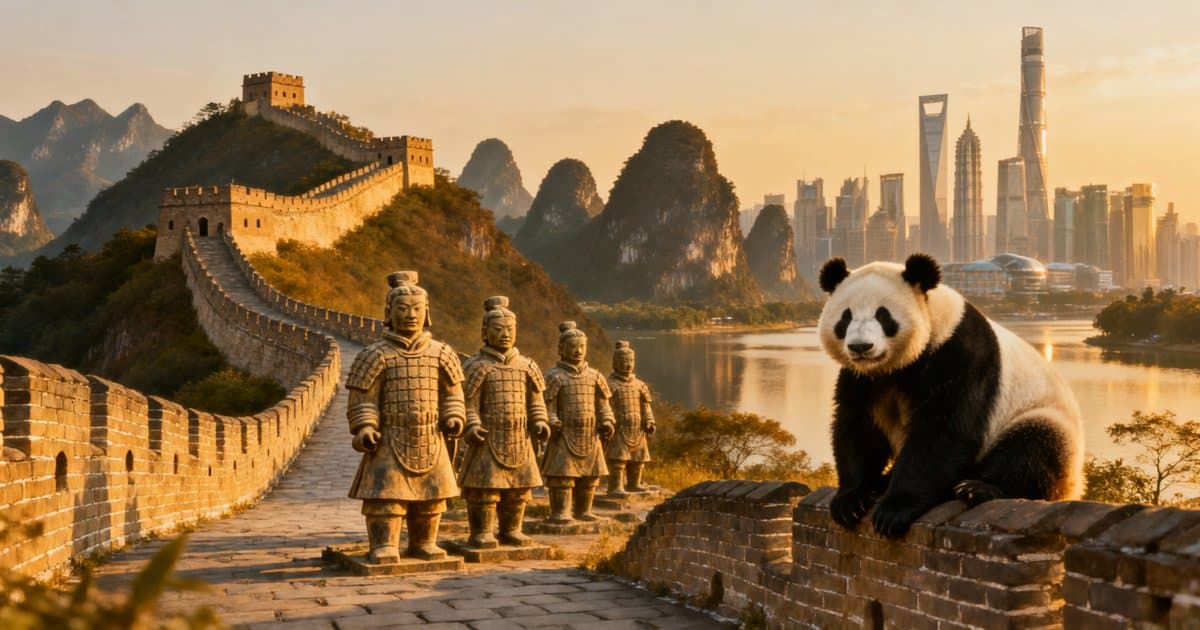
mixedFirst Time in China: The Ultimate 14-Day Route
Beijing to Shanghai via Xi'an, Chengdu, and Guilin — the classic first-timer route hitting every must-see. Two weeks, five cities, one incredible trip.
 budget
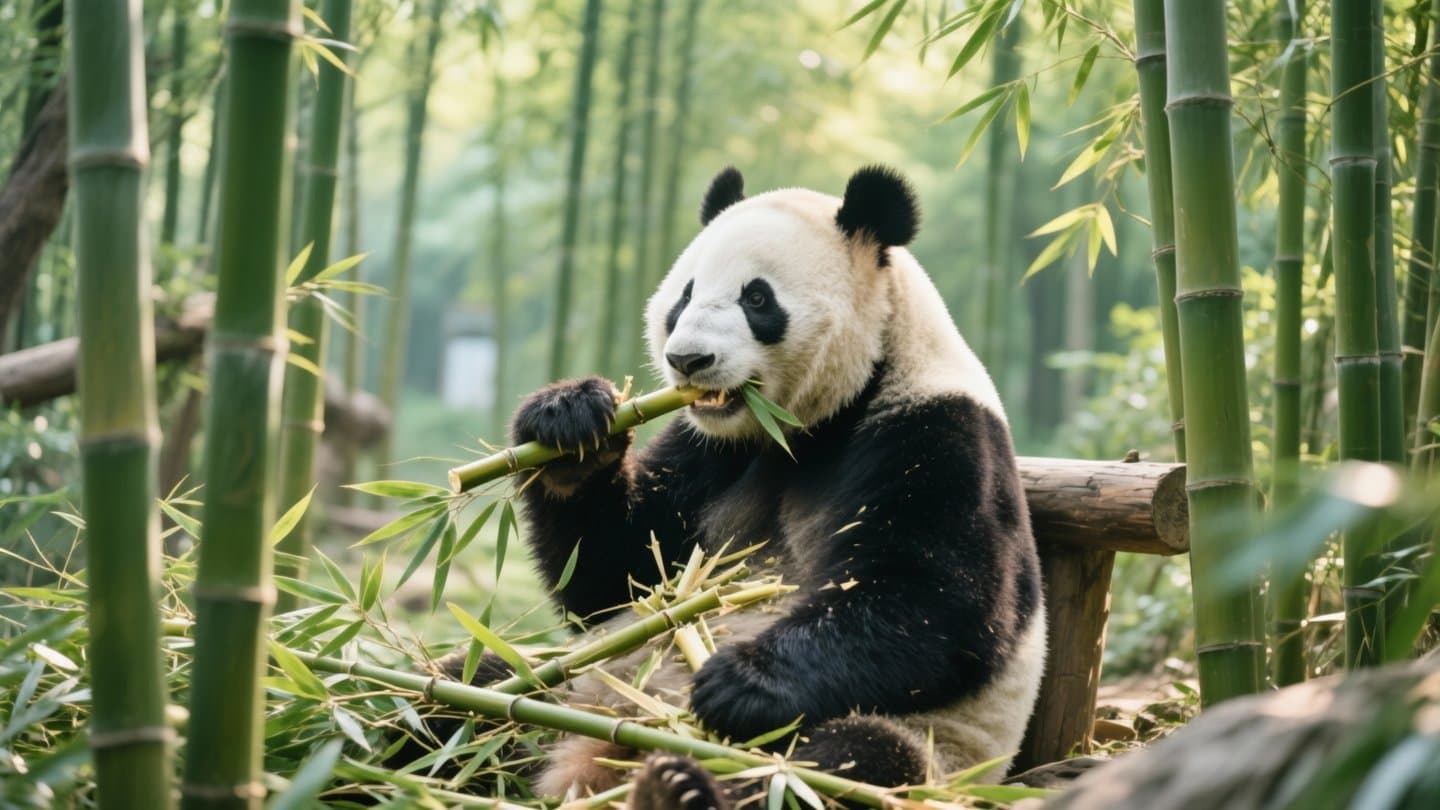
Chengdu & Sichuan in 5 Days: Pandas, Hotpot & Sacred Mountains
Five days exploring Sichuan — giant pandas at dawn, Leshan Giant Buddha, Mount Emei, and more hotpot than your stomach can handle.